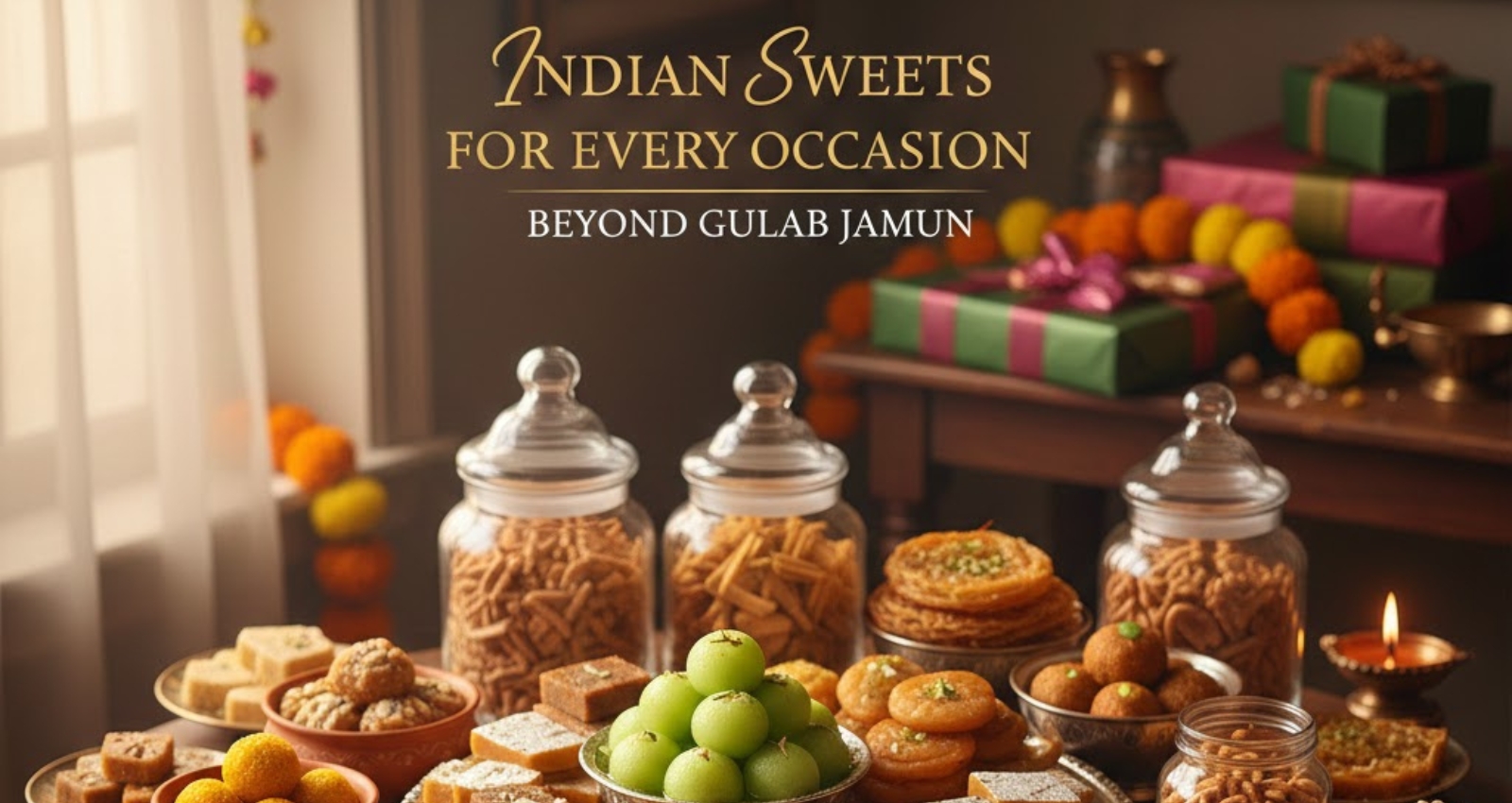
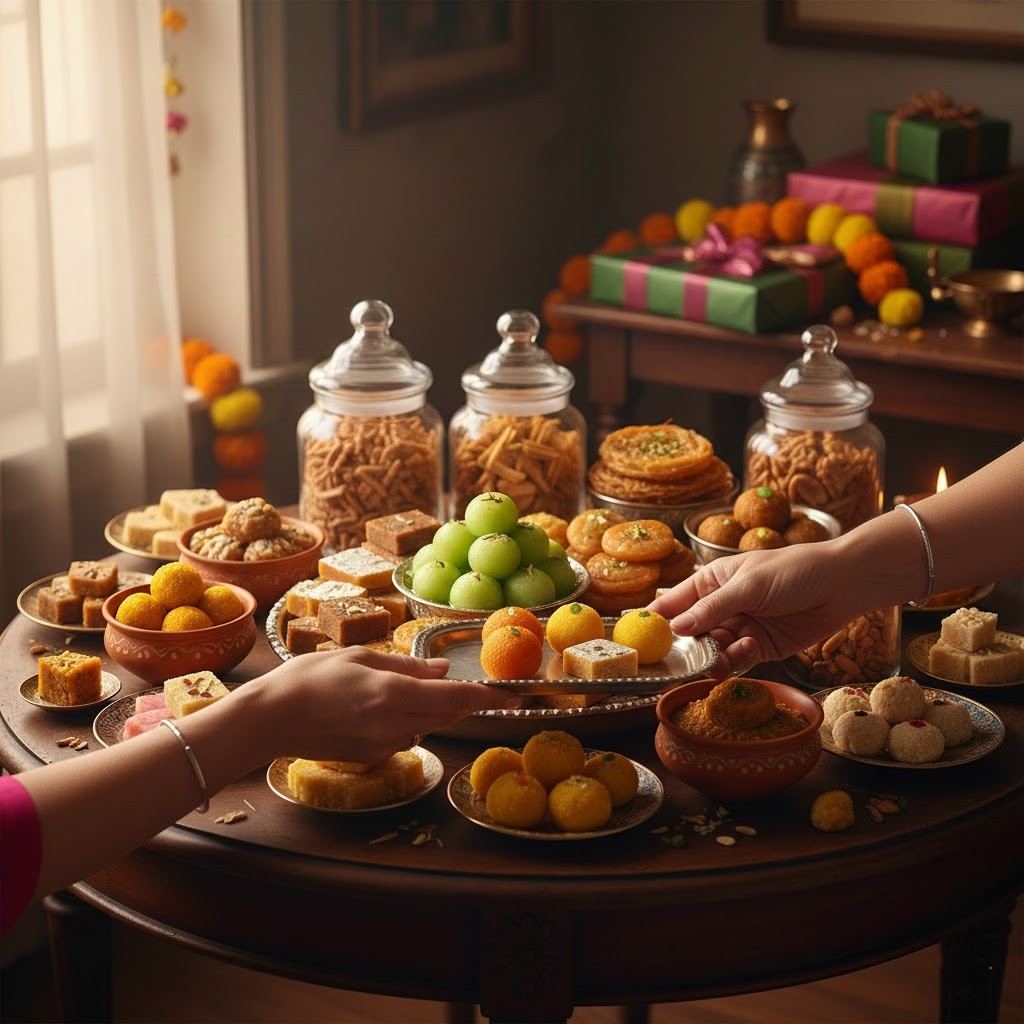
Indian sweets are not dessert. They are conversation starters, relationship builders, and ritual completers. When someone arrives with a mithai box, they are not bringing sugar. They are bringing respect, gratitude, or celebration in physical form.
At Tadka King, we see this every day. Sweets move differently than food. They mark moments. They close deals. They say things words cannot.
In Indian culture, sweets carry meaning that goes far beyond flavor.

When you visit someone's home for the first time, you bring sweets. When you ask for a favor, you bring sweets. When you want to honor someone, sweets come first.
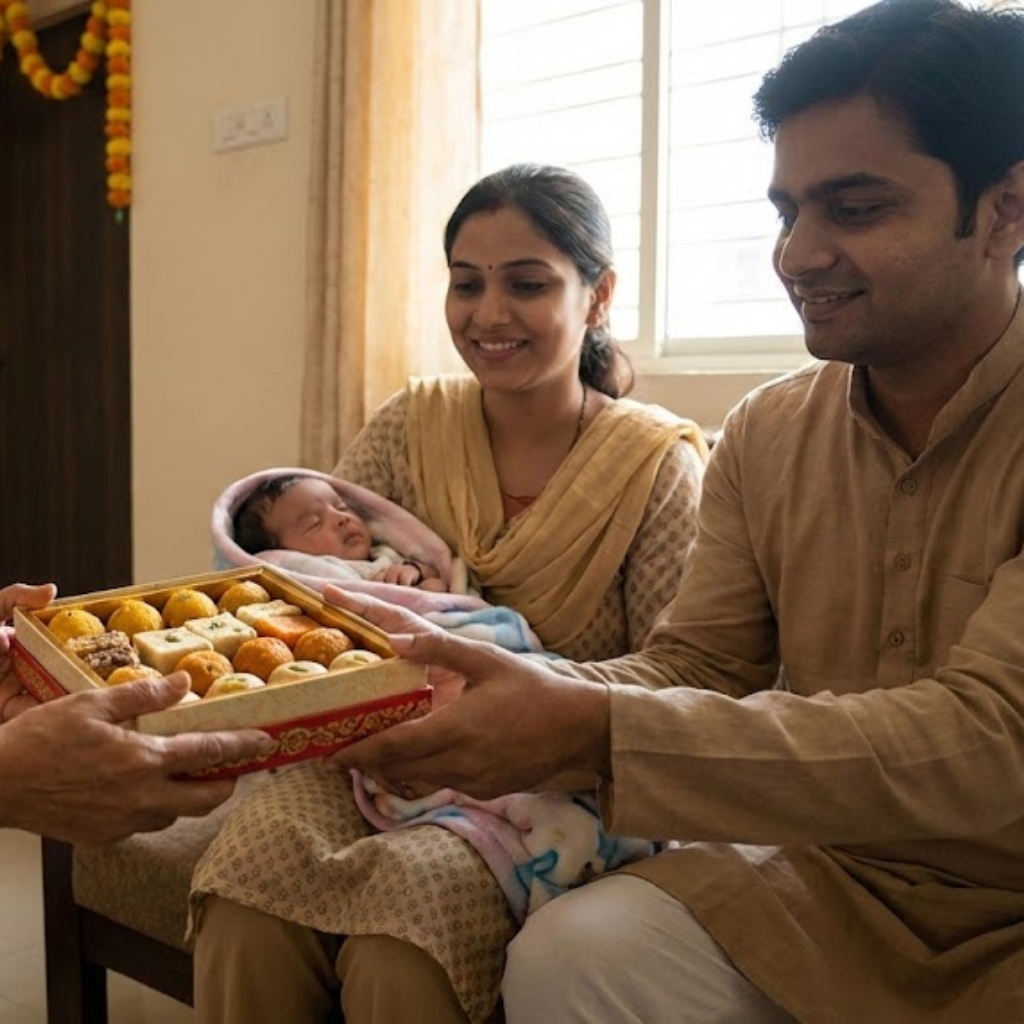
New job. New home. New baby. New business. Every major life shift includes mithai because it represents the sweetness you wish for what comes next.
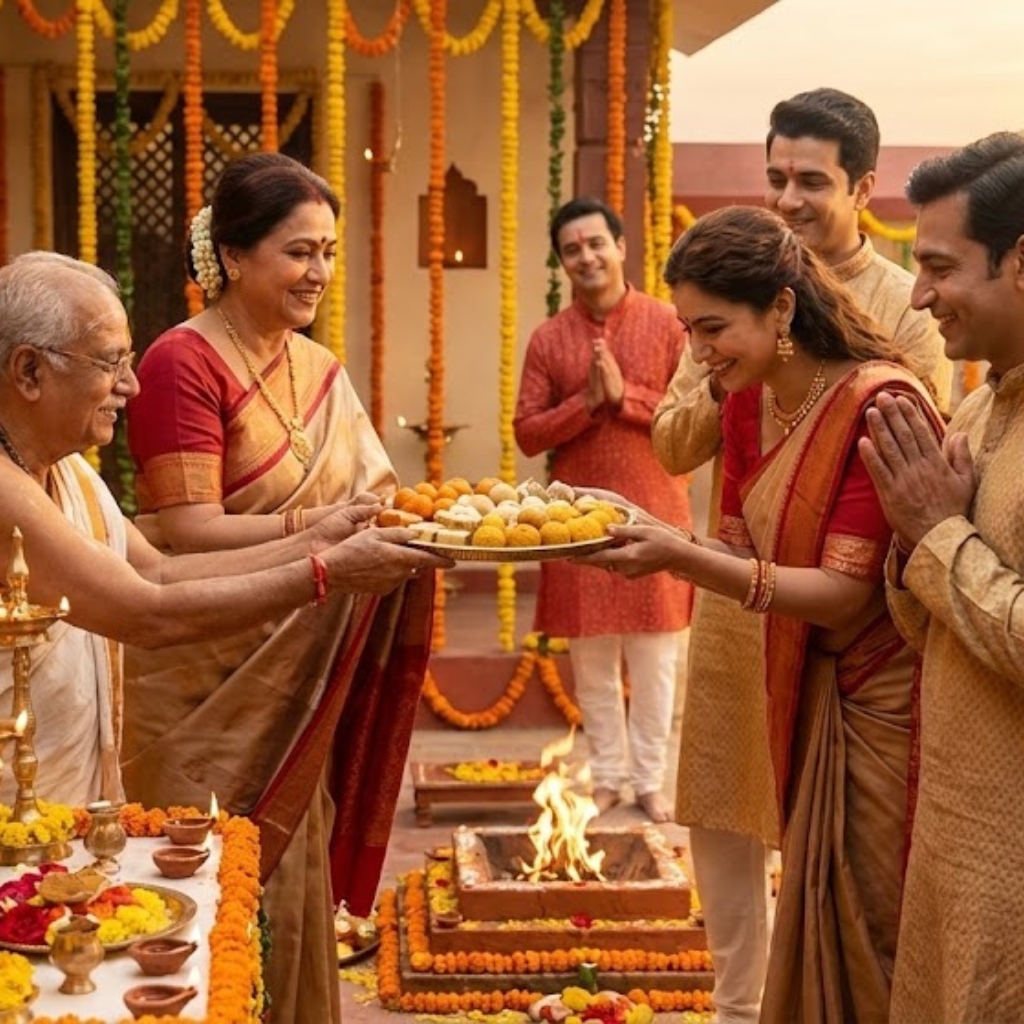
Religious ceremonies, festivals, weddings—none of these feel finished without the distribution of sweets. The act of sharing mithai is the act of sharing blessings.
This is why people do not look for “the best sweets.” They look for sweets that match the weight of the moment.

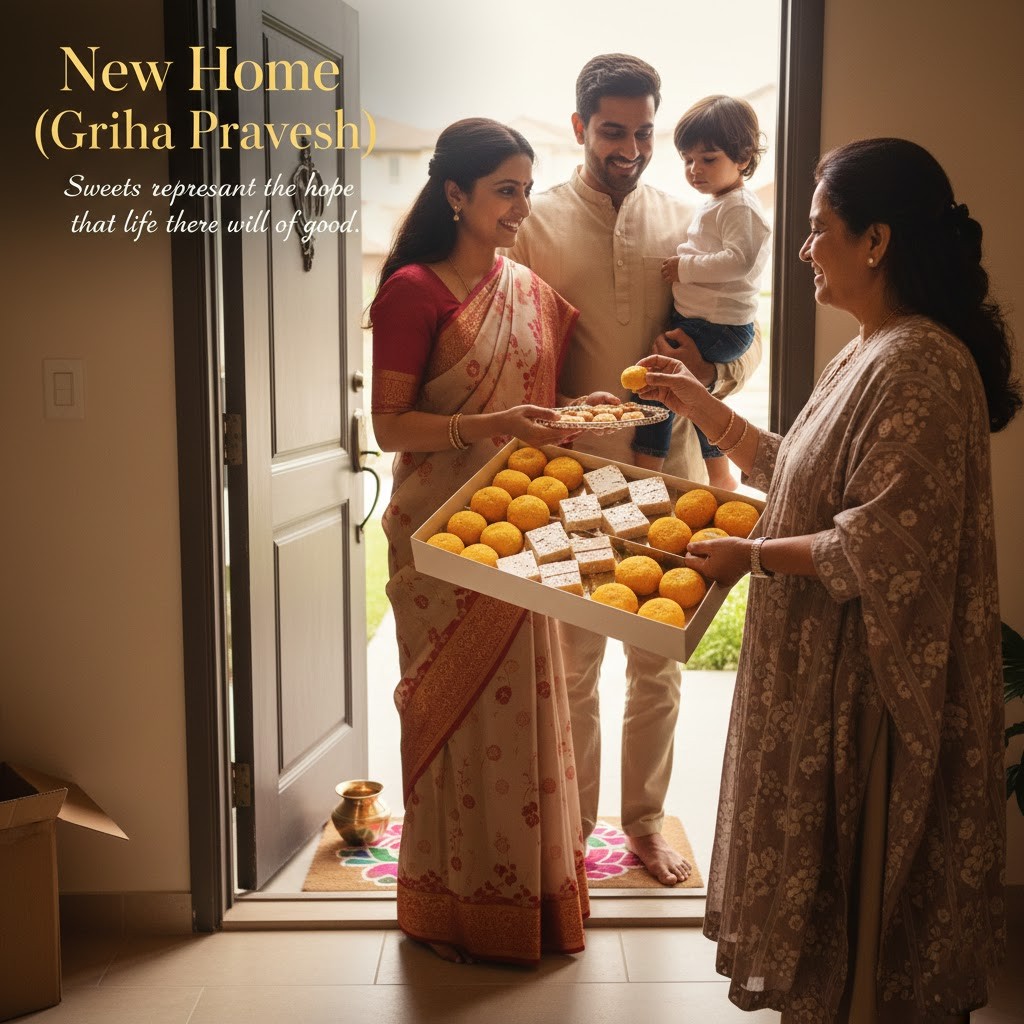
When someone moves into a new space, sweets represent the hope that life there will be good. Ladoos and barfi work well because they are substantial, not fragile. They can be distributed to neighbors and family without worry. People often order 2-3 kg when the guest list is uncertain. Better to have extra than to run short during a moment meant to build goodwill.
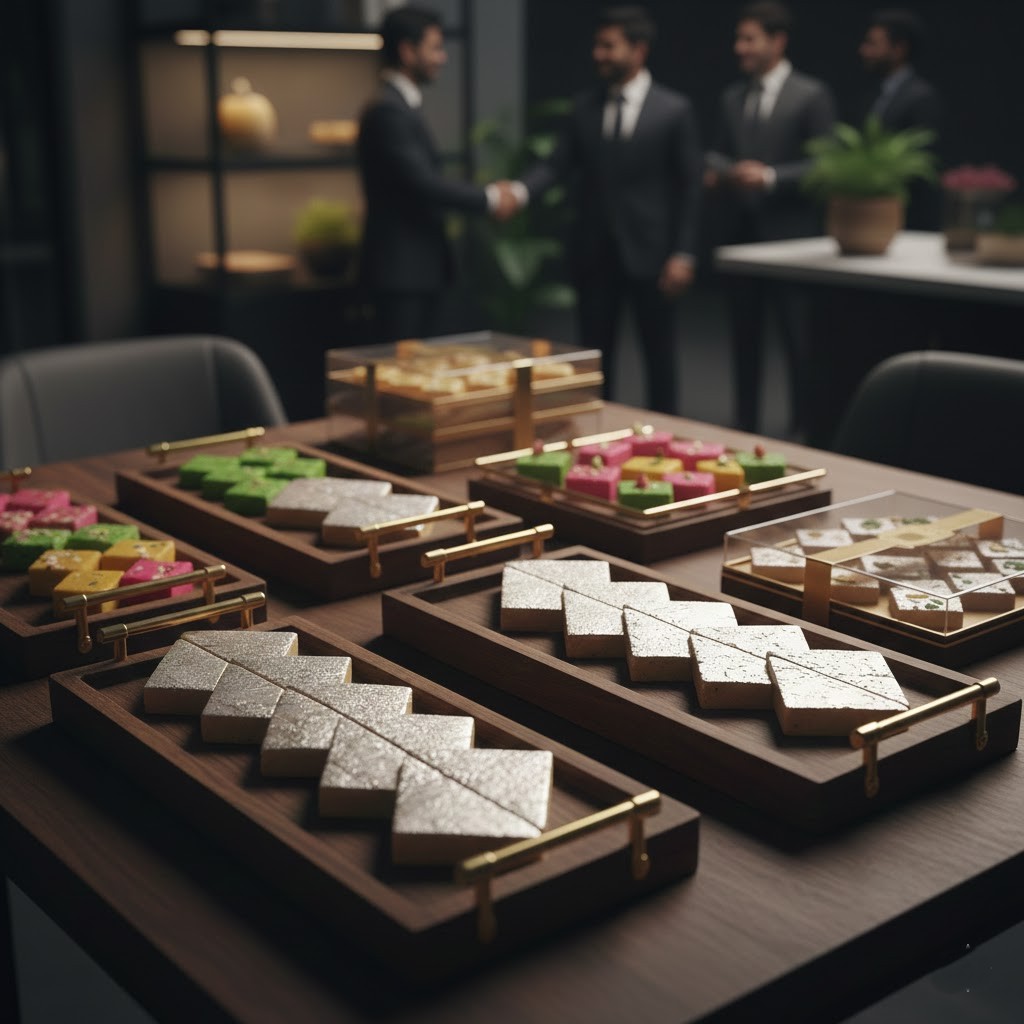
When a new business opens or a deal closes, sweets are the first thing brought to the office or store. Kaju katli is common here because it looks clean, travels well, and feels premium without being excessive. Corporate clients often order trays of assorted mithai for client meetings or team celebrations. The variety signals effort. The packaging signals professionalism.
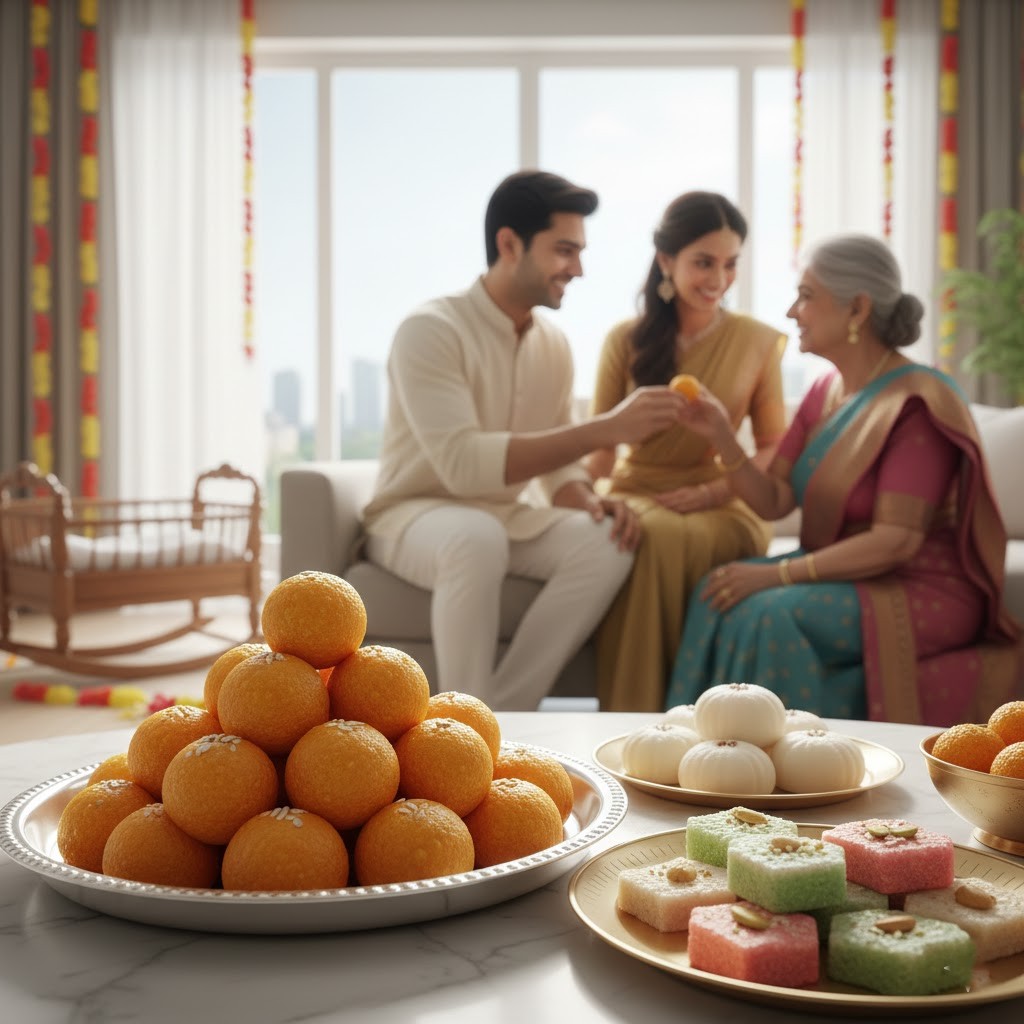
The arrival of a child changes everything, and sweets mark this shift. Motichoor ladoos are traditional, but families also choose peda or barfi depending on regional background. What matters more than the type is the act itself—sharing sweetness with those who will be part of the child's life.
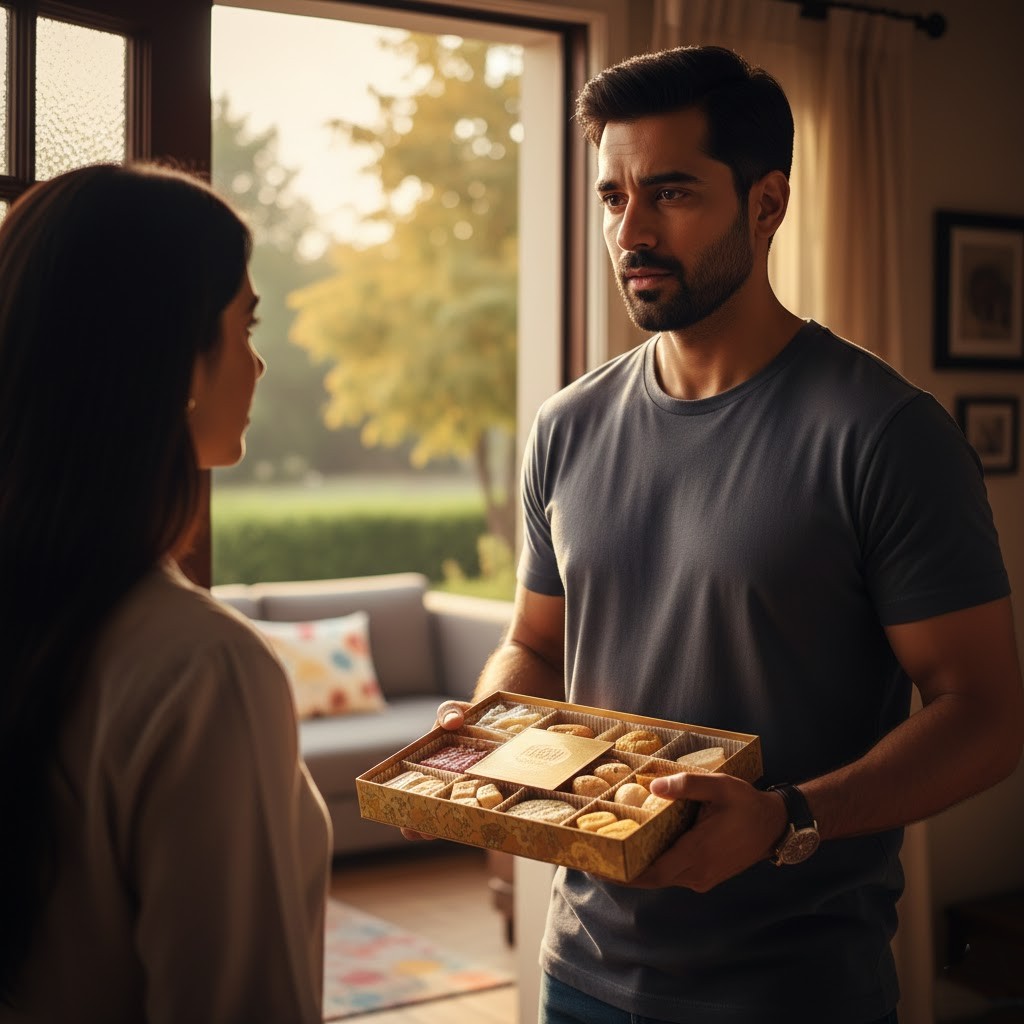
This one surprises people, but it is real. When relationships need repair, sweets can soften the approach. Showing up with mithai signals, "I want this to be better." It does not solve everything, but it opens the door.
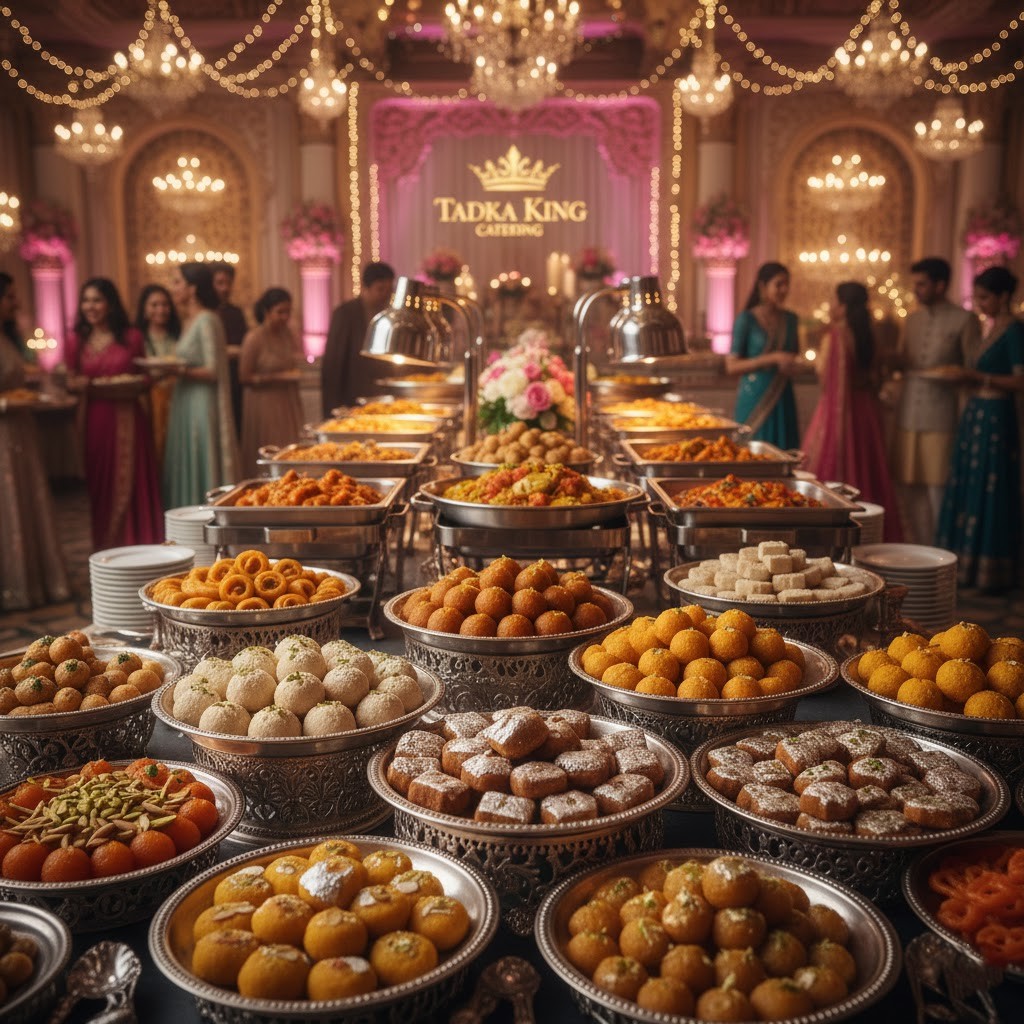
Weddings are not one-day events. They are multi-stage processes, and sweets appear at nearly every phase.This is why at Tadka King, sweets are never separate from catering. If you are handling food for 50-500 people, sweets are part of the same conversation.
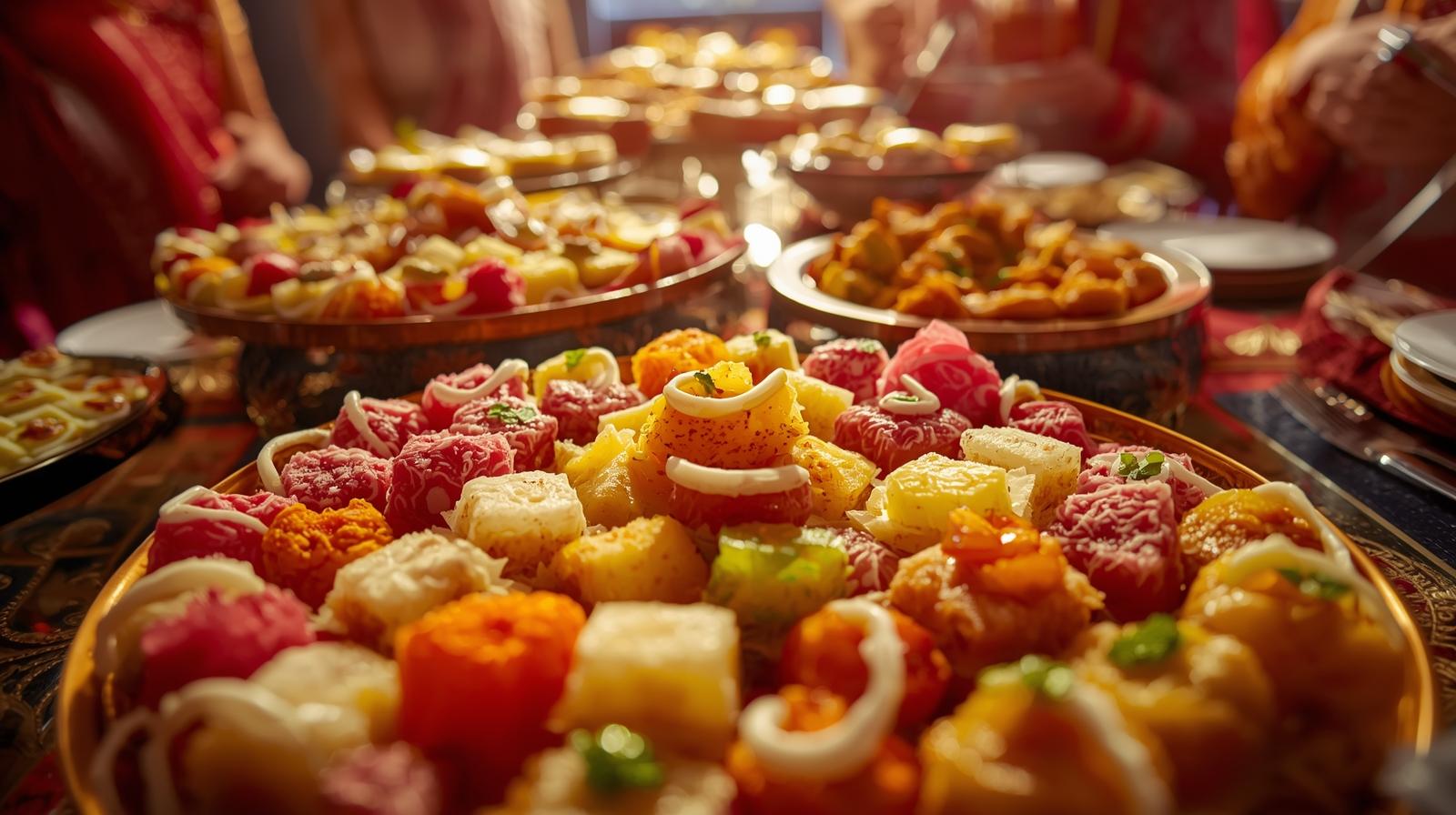
The heaviest mithai season of the year. Everyone orders. Families, offices, temples, community groups. Popular choices: Kaju katli, motichoor ladoo, soan papdi, besan ladoo. Volume orders jump 300-400% in the two weeks before Diwali.
Springtime festivals bring lighter, milk-based sweets. Gulab jamun becomes more popular. So does rasmalai. The mood is celebratory, and the sweets reflect that. Orders tend to come in last-minute because people finalize guest lists late.
Religious significance drives the selection. Offerings to Krishna include peda, makhan, and barfi. Temples and community centers place large orders for distribution after prayers.
Sisters give sweets to brothers, but the real demand comes from corporate and community gifting. Companies send mithai boxes to employees. Families send them across cities.Packaging matters more here than at any other time. The box is part of the message.
Smaller, more intimate events. Women break fasts together, and sweets are central. Orders are often 1-2 kg, but consistency matters. These are personal rituals, not public displays.
Indian sweets have found their place in professional settings, especially in areas like Brampton where workplaces reflect the diversity of the population.
Promotions, project completions, or Diwali at work—mithai fits when cake does not. It is familiar, shareable, and does not require plates or forks. Assorted trays work best, accommodating different tastes without individual orders.
Temples, gurdwaras, and cultural organizations order sweets for gatherings of 50 to 500 people. Reliability matters more than variety. With Tadka King, sweets arrive as part of one coordinated, on-time delivery.
Realtors, mortgage brokers, and insurance agents use mithai boxes as client gifts. They are personal, culturally meaningful, and memorable. Orders often double during spring and fall when real estate activity peaks.
Here is the truth most people miss: sweets are rarely purchased in isolation.
When someone orders mithai, they are often planning something larger. A gathering. A ceremony. An event that requires more than dessert.
This is why at Tadka King, sweets are part of a larger system:
People do not think, “I need sweets.” They think, “I need to handle food for this moment.” Sweets are one piece of that need.
If the group is mixed—age, background, dietary preferences—variety matters. Assorted trays let people choose.
If the group is specific—elderly relatives, children, temple attendees—you can go deeper into fewer options.
Some sweets last days. Others need to be consumed within hours. If you are ordering in advance or distributing over time, ask about shelf stability.
Barfi and ladoo generally hold better than anything cream-based.
A business meeting is different from a family puja. Kaju katli feels formal. Jalebi feels celebratory. Peda feels traditional.
The sweet should match the tone of the event, not work against it.
Under-ordering sweets creates awkwardness. Over-ordering creates goodwill (and leftovers people happily take home).
When in doubt, go slightly higher than your guest count. Sweets do not go to waste in Indian households.
At Tadka King, we built our business around a simple truth: people need food solutions, not just food products.
When someone orders sweets from us, we do not just ask, “Which mithai?” We ask, “What is happening? How many people? What else do you need?”
Because sweets are never just sweets.
They are part of a wedding where we are also managing trays and live cooking. They are part of a corporate Diwali event where we are delivering food for 200 people. They are part of a last-minute puja where someone called at 2 a.m. because no one else was open.

Indian sweets are never just an add-on. They’re part of how moments are marked, guests are welcomed, and occasions feel complete.
At Tadka King, sweets aren’t handled separately. They’re integrated into the full food experience — coordinated with catering, timed with rituals, and delivered ready to serve. Because when food matters, everything has to work as one.
Order at least one week ahead, and two weeks for Diwali. As demand rises, supply chains tighten and quality ingredients become harder to source.
Place your mithai order when you finalize catering. If food is being prepared for hundreds of guests, sweets should be planned at the same time to ensure smooth logistics and consistent quality.
This is where availability matters most. Religious observances, unexpected family arrivals, or community gatherings during times of loss do not always allow advance notice.
Customers do not return for sweets alone. They return because we removed uncertainty.
They ordered for a wedding, and everything arrived on time. They called at midnight, and someone answered. They needed food for 100 people with two days’ notice, and we made it happen.
Sweets are the entry point. Reliability is why they stay.
Indian sweets are not about sugar. They are about marking the moments that matter.
At Tadka King, we treat them that way. Not as a product line, but as part of the larger system that helps you handle food when it matters most.
When you need sweets for an event—small or large, planned or last-minute—we are ready.
Because hunger and celebration do not check the clock. Neither do we.
35 Main St N, Brampton, ON L6X 1M8
Phone: (905) 230-0102
Open 24/7 – Because your needs don’t follow a schedule
Indian sweets represent respect, celebration, and goodwill. They are used to mark life transitions, complete rituals, and strengthen relationships. In Indian culture, sharing sweets is a way of sharing blessings, not just dessert.
For events like weddings and Griha Pravesh, sturdy and easy-to-serve sweets work best. Ladoos, barfi, and kaju katli are popular because they travel well, stay fresh longer, and suit both formal and family gatherings.
It’s always better to slightly over-order. For uncertain guest lists, people commonly order 2–3 kg or more. Under-ordering can feel awkward, while extra sweets are happily shared or taken home.
Yes. Indian sweets are widely used for office celebrations, client gifting, and corporate festivals. Assorted mithai trays are especially popular because they look professional, are easy to share, and suit diverse preferences.
No. At Tadka King, sweets are part of the full food solution. They are coordinated with tray catering, live catering, and event logistics to ensure everything arrives together, on time, and ready to serve.
For festivals, it’s best to order at least one week in advance—two weeks for Diwali. For weddings and large events, sweets should be finalized alongside catering. For last-minute needs, Tadka King offers 24/7 availability.
Swaran Sandhu has 8+ years of experience in the HoReCa industry and a passion for writing about food, restaurants, and Indian cuisine, especially covering locations across Ontario (Canada).