Catering by Tray vs. Live Catering: Which Is Right for Your Event?
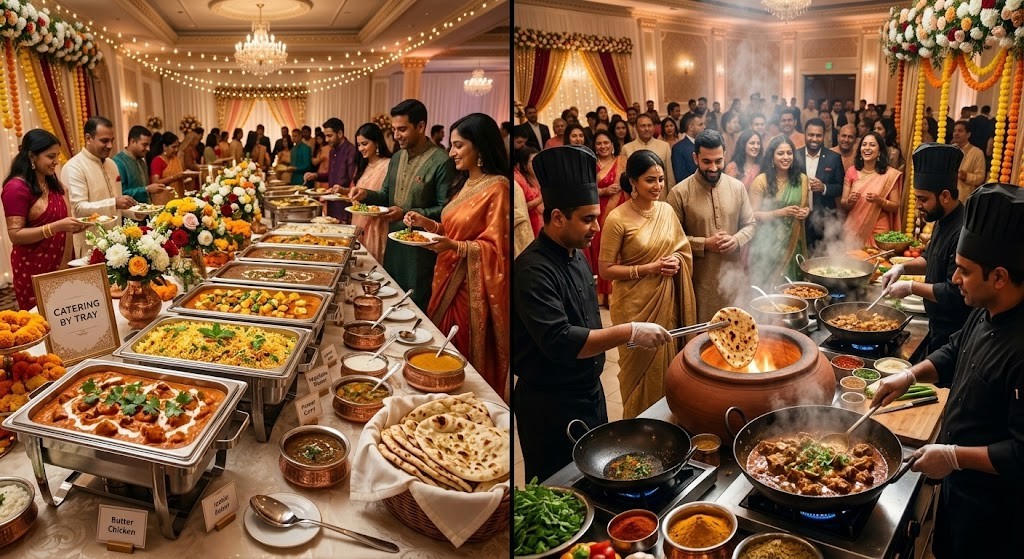
Choosing between these two catering models is not just about budget. It is about understanding what level of service your event genuinely needs, what experience you want your guests to have, and what logistical realities you are working with. Get this decision right, and your event runs smoothly, your guests are impressed, and you stay within budget. Get it wrong, and you end up either overpaying for services you did not need, or underpreparing for an event that deserved more.
This guide is your complete breakdown of Catering by Tray versus Live Catering — what they are, how they differ, what each one costs, and most importantly, how to decide which one is right for your specific event.
Why do two events — both with 100 guests, both serving Indian food, both at the same venue — end up with wildly different catering quotes that can vary by thousands of dollars? The answer lies in a single decision: Catering by Tray or Live Catering. And that decision changes everything.
What Are These Two Models? Understanding the Fundamental Difference
Before we compare them, let’s define each model clearly — because the names alone do not always make the distinction obvious.
Catering by Tray: Pre-Cooked, Delivered, Served
Catering by Tray means that your food is prepared in advance at the caterer’s kitchen, packed into aluminum or stainless steel serving trays (chafing dishes), and delivered to your event venue. The trays arrive hot, ready to serve, and are set up on a buffet table with warming equipment (Sterno fuel or electric chafing stands) to keep the food at serving temperature throughout your event.
The catering team may stay to assist with setup and initial service, or you may handle the serving yourself (or hire separate staff). The food is pre-portioned by dish — you order X trays of Butter Chicken, Y trays of Dal Makhani, Z trays of Rice — and each tray feeds a specific number of people.
Think of Catering by Tray as ordering from a restaurant — but scaled up. The food is already made, and you are paying for the food itself plus delivery and basic setup.
Live Catering: On-Site Cooking, Full Team, Full Service
Live Catering means that a full kitchen team arrives at your venue with ingredients, equipment, and everything needed to cook the food fresh on-site during your event. The team sets up a working kitchen (usually in a back-of-house area or outdoor cooking station), prepares each dish to order or in batches as needed, and serves guests directly with dedicated serving staff.
Live Catering often includes live food stations — such as a Chaat counter where Golgappe are assembled in front of guests, a Dosa station where dosas are cooked fresh on a tawa, or a Kulcha station where breads come straight from a portable tandoor. The presentation, the theatre, and the immediacy are all part of the experience.
Think of Live Catering as bringing a full restaurant kitchen to your event — complete with chefs, servers, and the ability to adjust dishes in real-time based on guest preferences.
Side-by-Side Comparison: Every Key Difference at a Glance
Here is the complete breakdown across every dimension that matters when choosing between these two models:
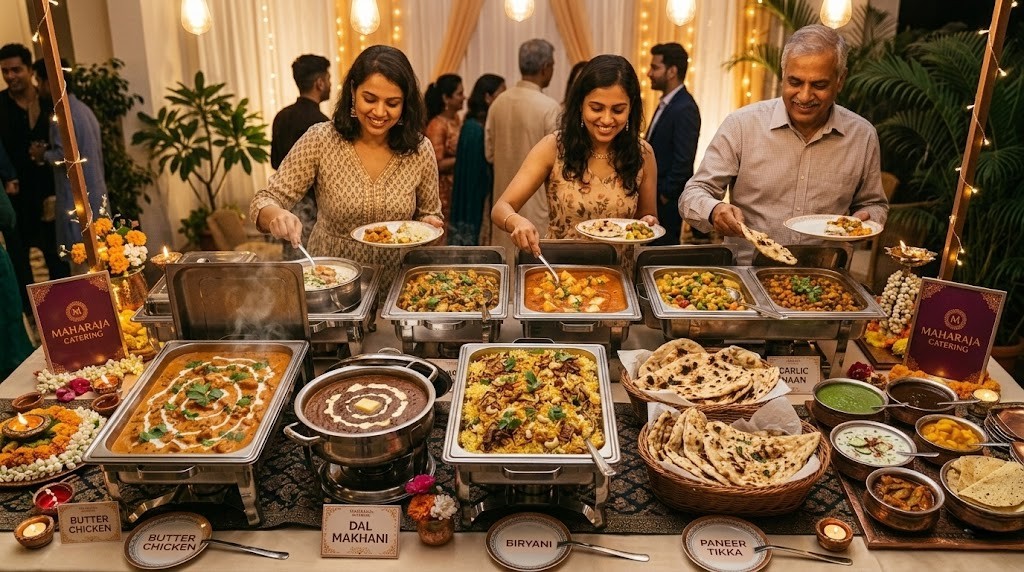
When Catering by Tray Is the Right Choice for Your Event
Catering by Tray is not a compromise. It is a strategic choice that makes perfect sense in specific scenarios. Here is when it is the best option:
1. You Are Hosting 50–150 Guests
For smaller to mid-sized events, the logistics and cost of bringing a full kitchen team on-site often do not justify the benefit. Tray catering gives you excellent food quality without the premium price tag of Live Catering.
2. Your Budget Is a Primary Concern
Tray catering costs significantly less than Live Catering because you are not paying for on-site chefs, extended labour hours, or live cooking equipment. If you have a firm budget ceiling and need to allocate funds to other parts of your event (venue, décor, entertainment), tray catering lets you serve great food without breaking the bank.
3. Your Venue Has Limited Kitchen Facilities
Not all venues have the back-of-house kitchen space, power supply, or ventilation required for live cooking. If you are hosting at a community centre, a backyard, or a small banquet hall without proper kitchen access, tray catering is often your only practical option.
4. Your Event Is Casual or Informal
Office lunches, casual birthday parties, family get-togethers, or fundraiser events where the food is important but not the centrepiece — these are ideal for tray catering. Your guests will be well-fed, and you avoid the formality and cost of a full service team.
5. You Want to Manage Serving Yourself (or With Minimal Staff)
Some hosts prefer to have control over the buffet, portion sizes, and pacing of the meal. Tray catering allows you to serve guests yourself or hire a small team to help, without needing a full catering crew present throughout the event.
Catering by Tray does not mean lower quality. It means optimised logistics for smaller, more budget-conscious events where food quality still matters but spectacle and white-glove service are not priorities.
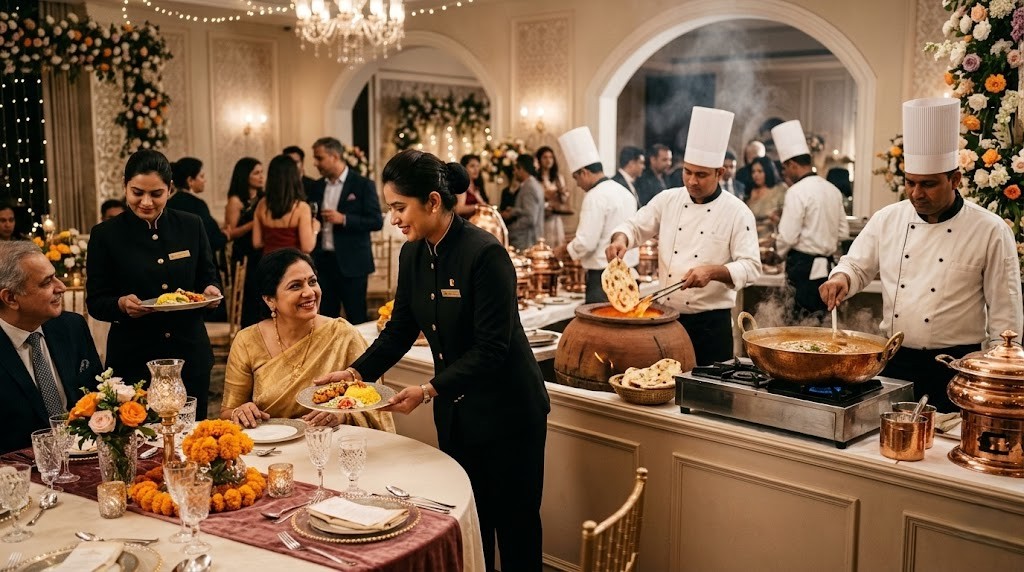
When Live Catering Is the Right Choice for Your Event
Live Catering is a premium service — and it earns that premium in scenarios where food is a central part of the experience. Here is when it becomes the clear choice:
1. You Are Hosting 150+ Guests (Especially 200+)
For large events, tray catering becomes logistically difficult. You need more trays, more warmers, more buffet space, and you still cannot guarantee that the food stays at optimal temperature and texture for hours. Live Catering solves this by cooking in batches and replenishing throughout the event.
2. You Want Live Food Stations or Interactive Elements
If you want a Golgappe station, a Dosa counter, a Kulcha tandoor, or a Chaat bar where guests watch their food being assembled fresh — this requires Live Catering. These stations are massive crowd-pleasers at weddings and corporate events, and they cannot be replicated with tray catering.
3. Food Quality and Freshness Are Non-Negotiable
Tray catering holds food at serving temperature for 2–3 hours. Live Catering means food is cooked minutes before it is served. If you are hosting a wedding, a milestone celebration, or a high-profile corporate gala where food quality is a reflection of your event’s caliber, Live Catering is the standard.
4. You Have Diverse Dietary Needs or Last-Minute Adjustments
Live Catering gives you flexibility. If a guest has a severe allergy, if someone requests less spice, or if you need to adjust portion sizes mid-event — a live kitchen team can accommodate those changes. Tray catering is fixed once delivered.
5. You Want Full White-Glove Service
Live Catering includes dedicated serving staff, often multiple servers per station, a front-of-house coordinator, and a cleanup crew. If you want your event to feel professionally managed from start to finish — with no burden on you or your family — Live Catering delivers that experience.
Live Catering is not just about food. It is about creating an experience where your guests feel taken care of, where the food is always fresh, and where the event runs smoothly without you lifting a finger.
What Does Each Model Actually Cost? A Realistic Pricing Guide
Pricing varies based on menu selection, guest count, and location — but here is a realistic framework for budgeting:
For a 100-guest event with a mid-range menu, expect to pay roughly $1,200–$1,800 for Catering by Tray, versus $2,000–$3,500 for Live Catering. The difference buys you fresh cooking, full service, and live stations.

The Decision Framework: Which Model Should You Choose?
If you are still uncertain, use this simple decision tree:
1. Ask: Is my guest count under 150? → If yes, lean toward Catering by Tray unless you have a large budget or strong preference for live stations.
2. Ask: Is this a wedding, major milestone, or VIP event where food quality is a reflection of the occasion? → If yes, choose Live Catering.
3. Ask: Does my venue have proper kitchen facilities or outdoor cooking space? → If no, Catering by Tray is likely your only practical option.
4. Ask: Do I want live food stations (Golgappe, Chaat, Dosa)? → If yes, you need Live Catering — these cannot be done with trays.
5. Ask: Is my budget flexible, and do I want white-glove service with no event-day stress? → If yes, Live Catering is worth the investment.
Still uncertain? Book a consultation with Tadka King. We will walk you through your specific event needs, guest count, venue, and budget — and recommend the model that makes the most sense for you.
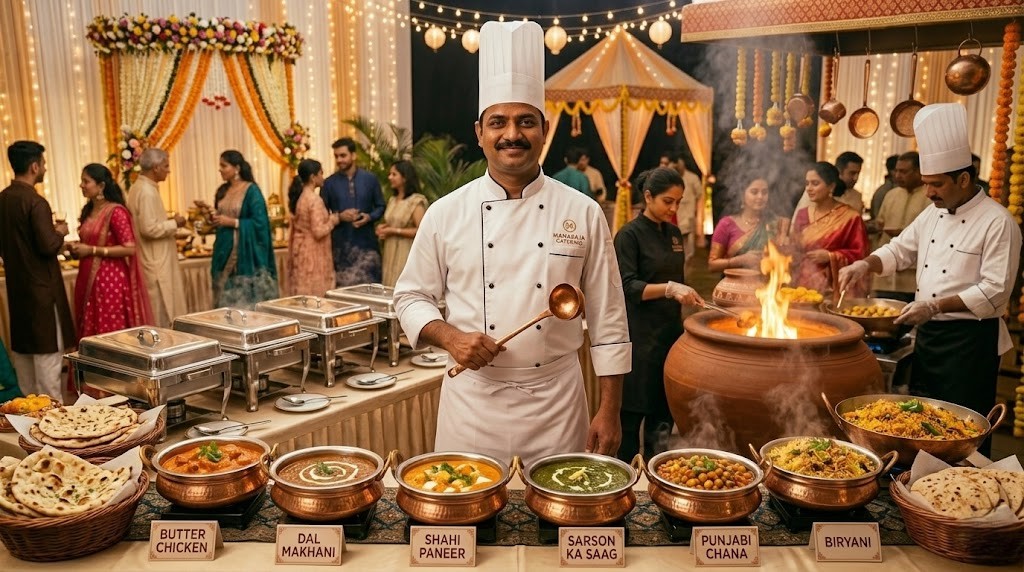
Why Tadka King's Expertise in Both Models Gives You an Honest Answer
Many caterers push one model over the other based on what is most profitable for them. At Tadka King, we offer both Catering by Tray and Live Catering — which means we have no financial incentive to steer you wrong. Our recommendation is based purely on what is best for your event.
We have catered hundreds of events across Brampton and the GTA using both models. We know when tray catering is the smarter choice. We know when live catering is worth every penny. And we know how to execute both flawlessly because we specialise in authentic Punjabi and North Indian cuisine — not generic pan-Indian menus where quality suffers.
Whether you choose Catering by Tray or Live Catering, you are getting the same kitchen team, the same ingredient quality, and the same commitment to authenticity.
Resources & Further Reading
Explore more about Tadka King’s catering services and plan your perfect event:
- Catering by Tray in Brampton — Full details on tray-based catering
- Live Catering Service in Brampton — Premium on-site catering with full team
- Indian Catering Services Overview — Complete guide to all catering options
- Full Food Menu — Explore all dishes available for catering
- Dine-In Experience at Tadka King — Taste our food before booking catering
- Reserve a Table — Book a tasting visit to finalise your menu
- Traditional Indian Sweets — Add handcrafted mithai to your catering order
- Indian Street Food in Brampton — Add live Chaat stations to your event
- Explore More on Our Blog — More guides on catering, events, and Indian cuisine
- Visit the Tadka King Homepage — Discover everything Tadka King offers Brampton and the GTA
Frequently Asked Questions (FAQs)
Can I mix both models — tray catering for some dishes and live stations for others?
Yes. Some clients choose a hybrid approach — tray catering for main dishes and sides, with a live Golgappe or Chaat station as a special feature. This gives you cost savings on the bulk of the meal while still offering an interactive, memorable element. Discuss this option with your caterer during planning.
How far in advance do I need to book each catering model?
For Catering by Tray, booking 2–4 weeks in advance is usually sufficient (though peak wedding season may require more lead time). For Live Catering, book at least 4–6 weeks in advance, especially for large events (200+ guests) or multi-day celebrations where multiple setups are required.
Does Tadka King provide serving staff for Catering by Tray?
Serving staff is optional for Catering by Tray. You can handle serving yourself, hire your own staff, or add serving staff through Tadka King for an additional hourly fee. For Live Catering, full serving staff is included in the base price.
What happens if I order tray catering and run out of food?
This is why accurate guest counts matter. Tray catering is pre-portioned — once the trays are empty, there is no backup kitchen to make more. Always overestimate by 10–15% to ensure you have enough. With Live Catering, chefs can prepare additional batches if needed.
Can I get the same menu with both catering models?
Yes. Tadka King offers the same core menu for both Catering by Tray and Live Catering. The difference is not the dishes themselves — it is how they are prepared (pre-cooked vs. fresh on-site) and how they are served (buffet trays vs. live stations with dedicated staff).
Is Live Catering worth the extra cost for a 100-guest wedding?
It depends on your priorities. If food quality and presentation are central to your wedding experience, Live Catering is worth it even at 100 guests. If you need to balance your budget across multiple wedding expenses (venue, photography, décor), Catering by Tray offers excellent quality at a lower price point.
Do both models include cleanup and takedown?
For Catering by Tray, the delivery team will set up the buffet and return later to collect empty trays and equipment. Cleanup of the buffet area and guest tables is usually handled by the venue or your event staff. For Live Catering, full cleanup — including kitchen teardown, buffet area, and serving stations — is included.
Can I upgrade from Catering by Tray to Live Catering after booking?
Yes, but only if you make the change early enough (usually at least 3–4 weeks before the event). Live Catering requires significantly more planning, equipment, and staff scheduling. Contact your caterer as soon as possible if you want to upgrade.
Which catering model is better for outdoor events?
Both models can work for outdoor events, but Live Catering requires proper cooking facilities (portable kitchen setup, generator power, weather protection). If your outdoor venue lacks these, Catering by Tray is the more practical choice. Discuss your venue specifics with your caterer during planning.
Does Tadka King offer tastings before I book catering?
Yes. We encourage all catering clients — whether choosing Tray or Live Catering — to visit Tadka King for a dine-in experience before booking. This lets you taste our food in person and confirm it meets your expectations. You can also reserve a table online for a dedicated tasting visit.

Swaran Sandhu
Swaran Sandhu has 8+ years of experience in the HoReCa industry and a passion for writing about food, restaurants, and Indian cuisine, especially covering locations across Ontario (Canada).