How to Plan Indian Event Catering with a Local Brampton Expert
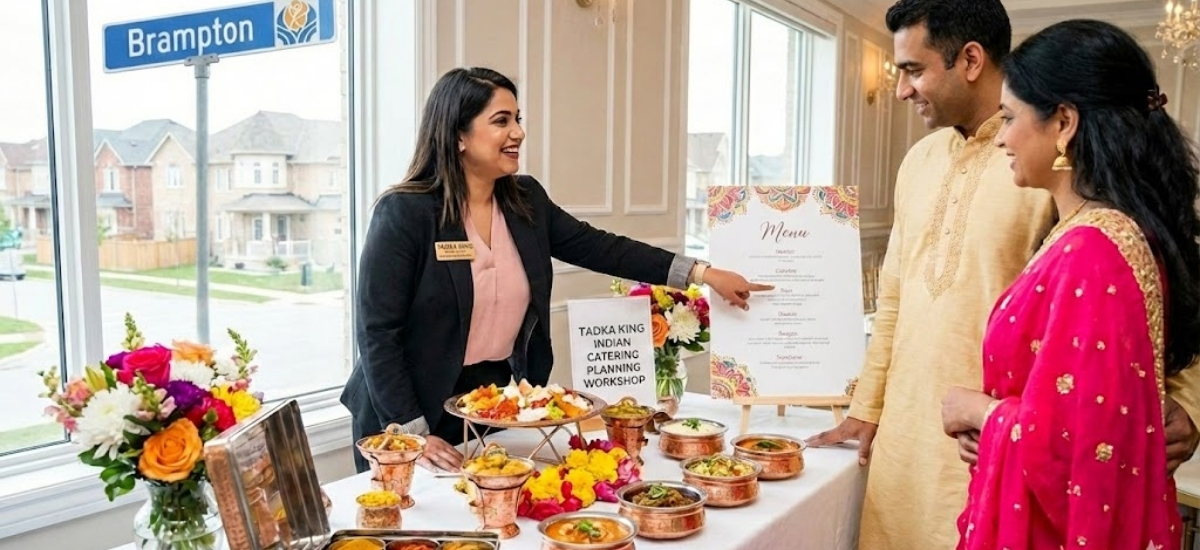
Event catering is not about finding someone who can cook for a crowd. It is about finding someone who can remove the single biggest stress point from your event: the certainty that food will be handled.
This guide is built from hundreds of events in Brampton. It covers what actually matters when planning Indian event catering, what questions to ask, and how to avoid the mistakes that create problems on event day.
At Tadka King, we see the same pattern every week. Someone calls about catering, and within two minutes, the real question surfaces: “Can I trust this will work?”
Why Indian Event Catering Is Different
Indian events operate on a different scale and structure than most Western catering models. Understanding this difference prevents mismatched expectations.
Volume and Variety
Indian guests expect variety. A single main dish does not work. Even a small gathering of 30 people typically requires 3-4 vegetable dishes, 2 types of bread, rice, dal, raita, and dessert.
Compare this to typical Western catering where one protein, one starch, and one vegetable can serve 100 people. The operational complexity is fundamentally different.
Cultural Expectations Around Hospitality
Running out of food at an Indian event is not a minor inconvenience. It is a failure of hospitality that people will remember and discuss.
This is why experienced caterers build in buffer quantities. It is also why accurate headcounts matter more than people realize.
Time Flexibility (Or Lack of It)
Indian events rarely start on time, but they expect food to be ready whenever the moment arrives. A religious ceremony might run 45 minutes long. Guests might arrive in waves, not all at once.
Your caterer needs to handle this without the food suffering. Hot food stays hot. Setup remains intact. Service adapts to actual timing, not planned timing.
Dietary Complexity
Vegetarian, vegan, Jain, no onion-garlic, gluten concerns, and regional preferences all show up at Indian events. A good caterer does not treat these as special requests. They are standard operating requirements.
Types of Indian Event Catering (What You Actually Need)
Before you contact a caterer, clarify which format matches your event. The three primary models operate differently.
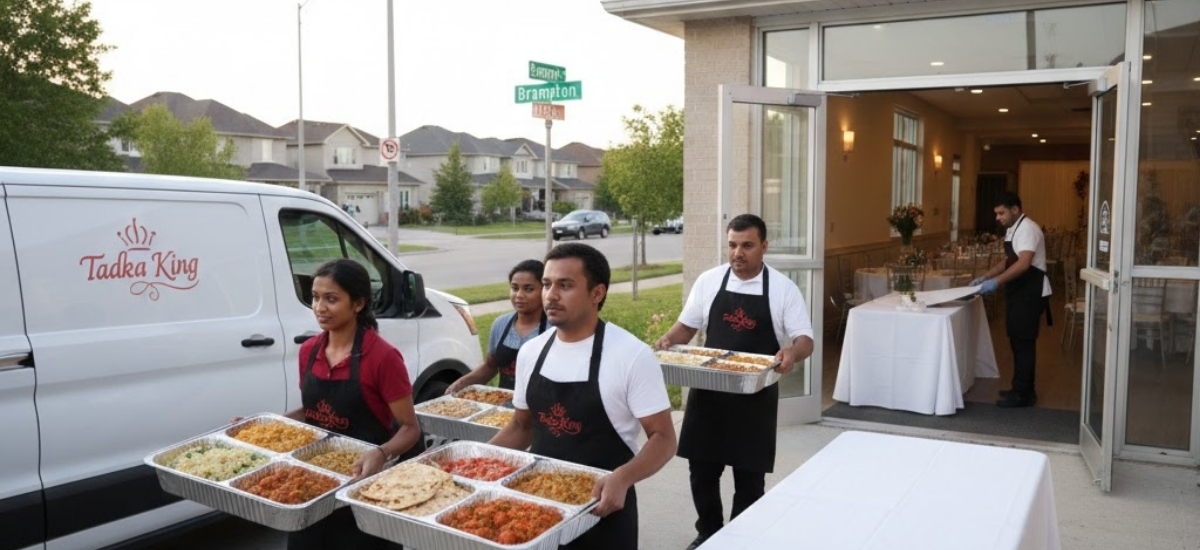
Tray Catering (Most Common)
Food is prepared in the kitchen, packed in trays, delivered to your location. You or your team handles setup and serving.
Best for:
Birthday parties (20-100 people)
Small religious gatherings
Corporate lunches
Family celebrations
Events where you have serving help
Advantages:
Lower cost than live catering
Faster turnaround
Works for tight budgets
Can handle last-minute orders (if caterer has capacity)
What you need to provide:
Serving utensils
Chafing dishes or warmers (unless caterer provides)
Plates, napkins, cutlery
Someone to serve
Questions to ask:
Are trays insulated? How long does food stay hot?
What size trays do you offer, and how many people do they feed?
Can you deliver at a specific time?
Do you provide disposable serving utensils?
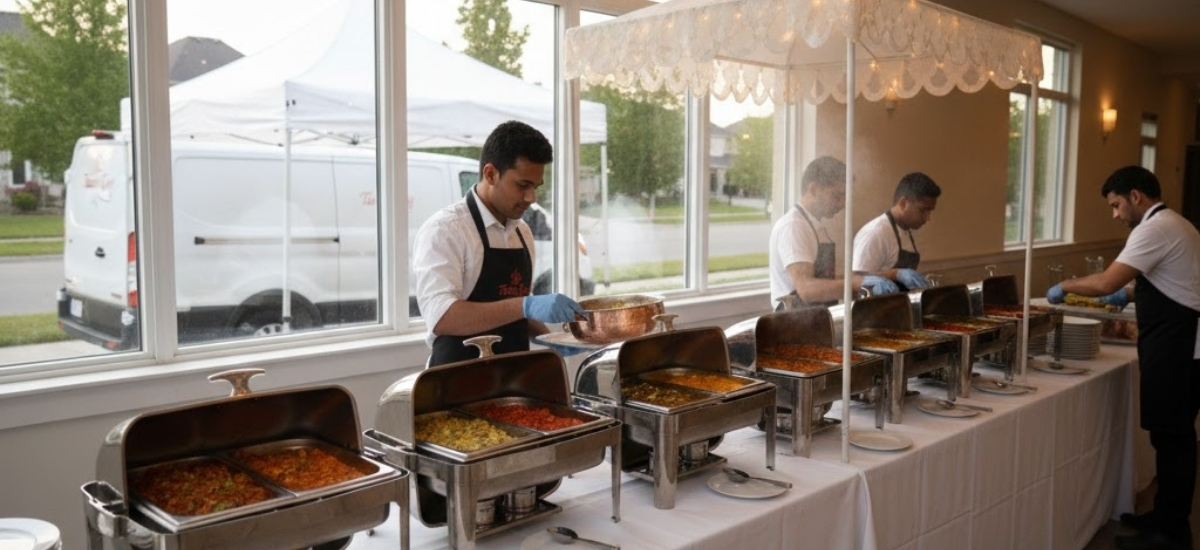
Buffet Catering with Setup
Caterer delivers food, sets up buffet stations, provides chafing dishes and warming equipment. You still handle serving or go self-serve.
Best for:
Medium-sized events (50-200 people)
Office events
Community gatherings
When you want professional setup but not full service
Advantages:
Professional presentation
Equipment included
Food stays warm longer
Less work for you than tray catering
What you need to provide:
Tables for buffet setup
Plates, napkins, cutlery (unless caterer provides)
Space for setup and breakdown
Questions to ask:
What does setup include?
How long will chafing fuel last?
Who handles breakdown and pickup?
Are serving utensils provided?
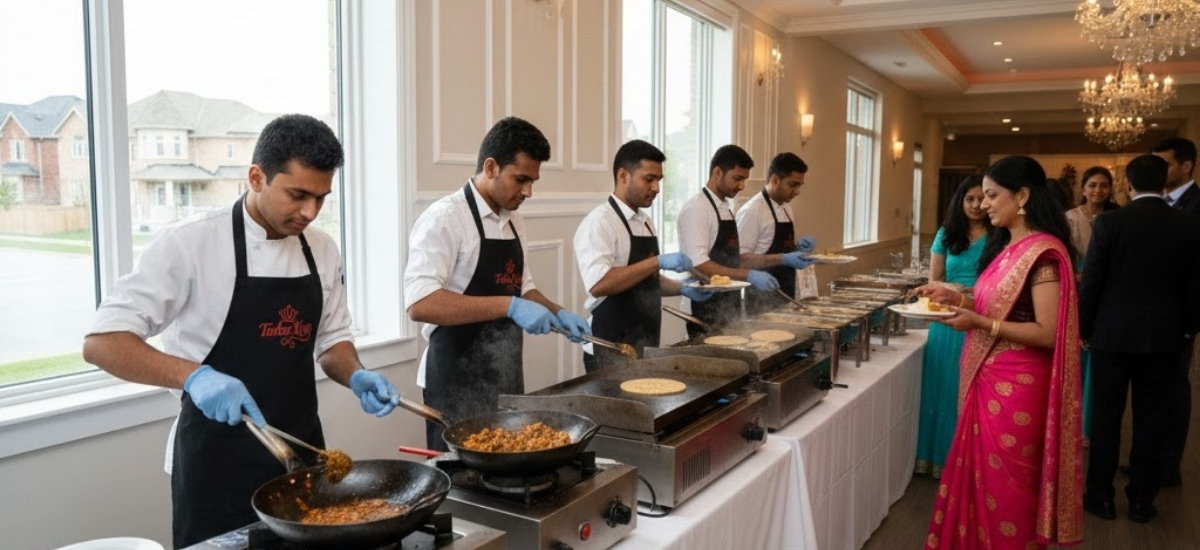
Live Catering (On-Site Cooking)
Caterer brings equipment, cooks on-site, and manages full service including serving staff.
Best for:
Weddings (100-500+ people)
Large religious events
Corporate galas
When authenticity and freshness matter most
Multi-day events
Advantages:
Freshest possible food
Full service (you do nothing)
Immediate adjustments if needed
Impressive for guests
What you need to provide:
Requires adequate space and power
Higher cost
Needs advance booking
Venue must allow on-site cooking
Questions to ask:
What equipment do you bring?
What are the power and space requirements?
How many staff will be on-site?
What is included in service (setup, serving, cleanup)?
What is included in service (setup, serving, cleanup)?
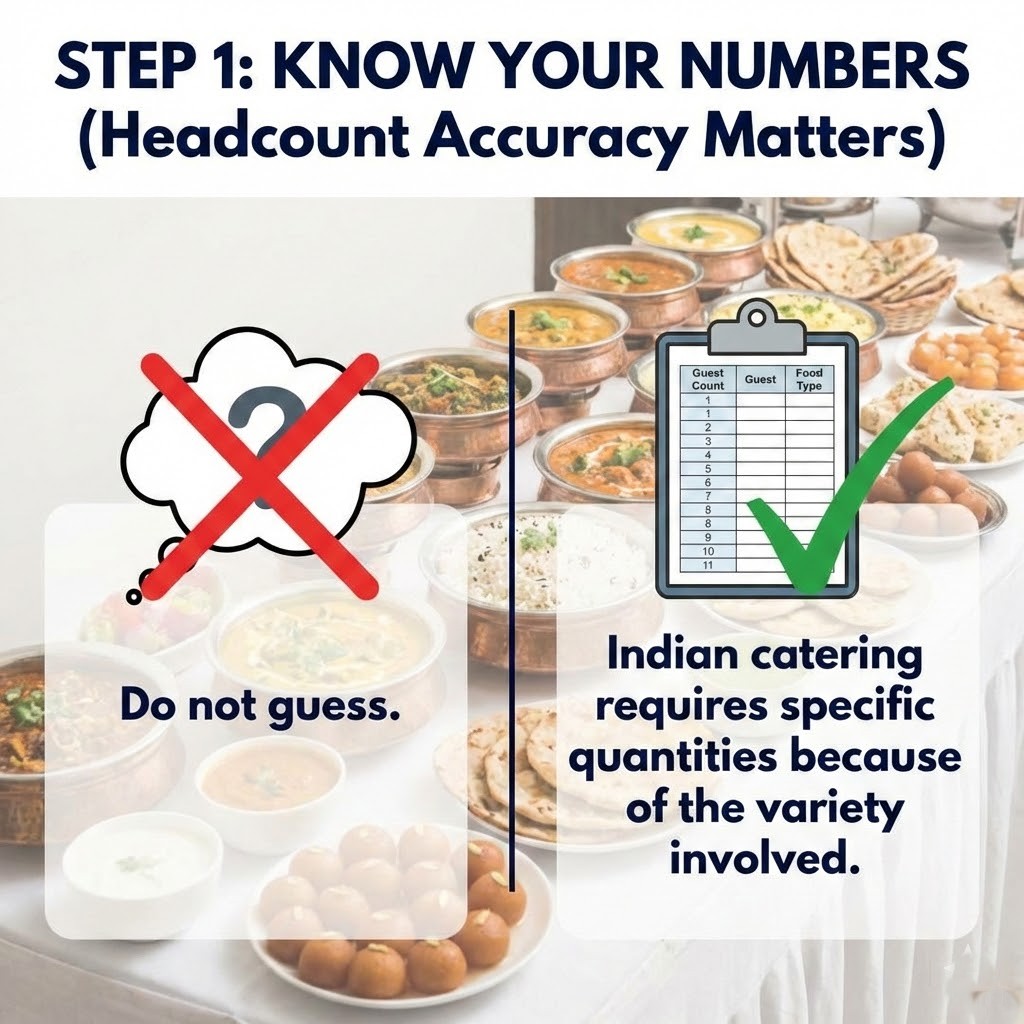
Step 1: Know Your Numbers (Headcount Accuracy Matters)
Do not guess. Indian catering requires specific quantities because of the variety involved.
Start with confirmed RSVPs. Then add 10-15% buffer for:
People who say no but show up anyway
Extra family members (especially children)
Neighbors or last-minute guests
If you are planning for 80 people, order for 90-95. If you hit 100 people, order for 110.
The cost of extra food is small compared to the stress of running short.
Step 2: Decide on Menu Style
Indian catering offers different menu structures. Choose based on your event formality and budget.
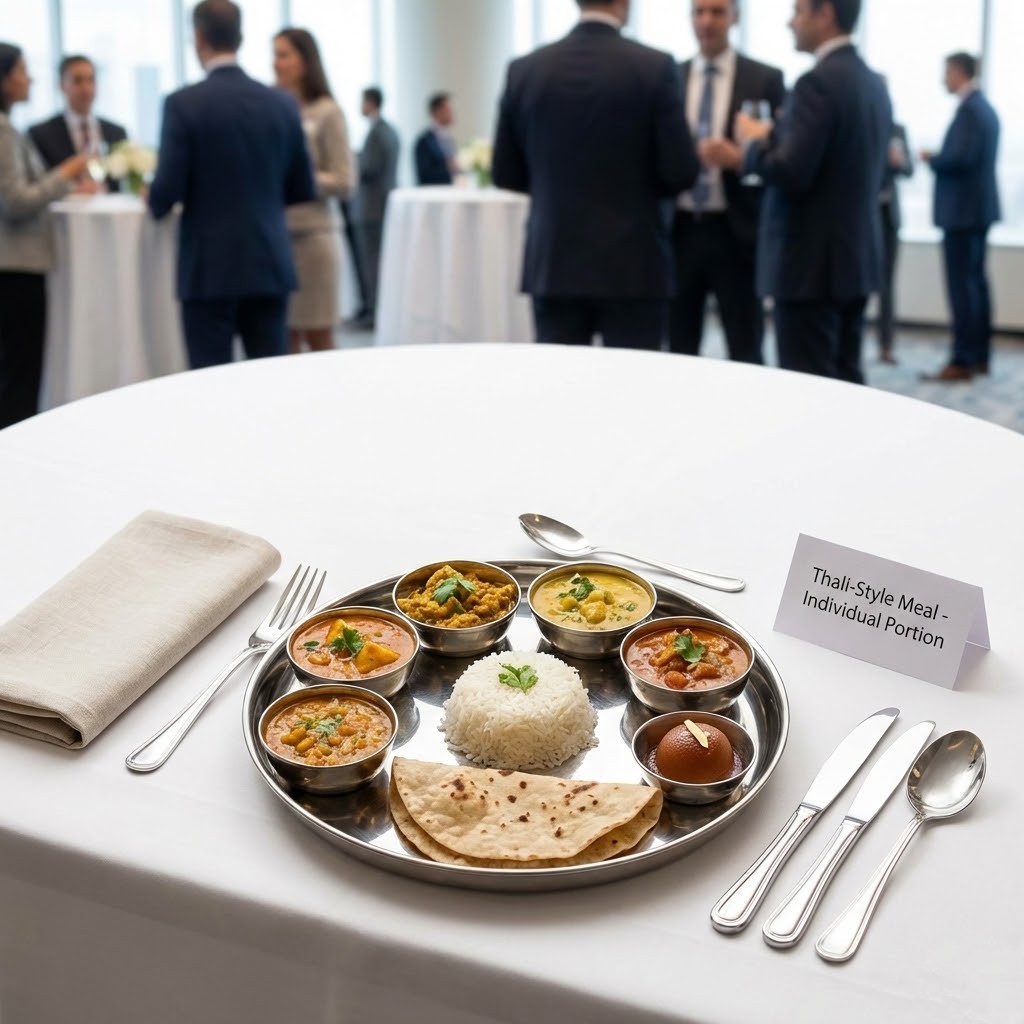
Thali-Style (Individual Portions)
Each guest receives a full thali with all items. Controlled portions, minimal waste, professional presentation.
Best for corporate events, formal gatherings, seated service.
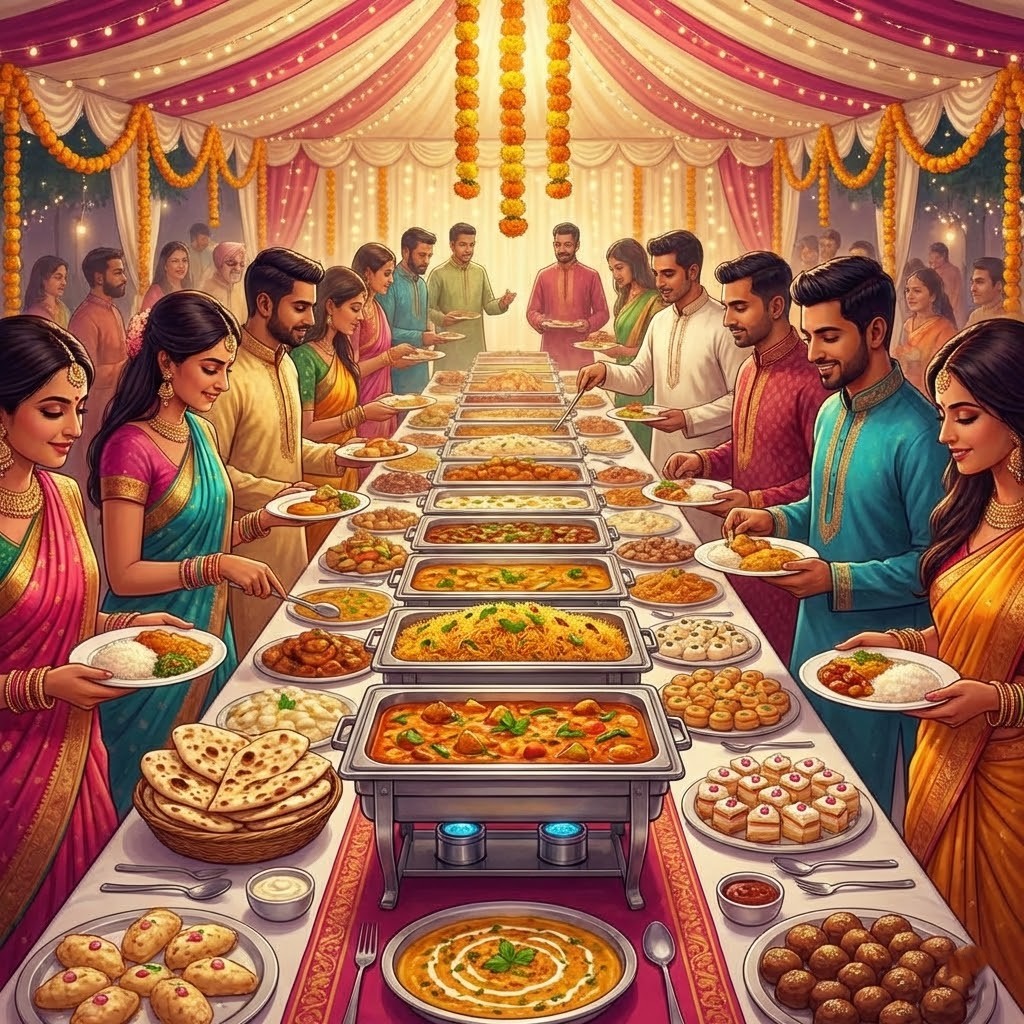
Buffet-Style (Most Common)
Guests serve themselves from buffet stations. Requires more food volume but feels more festive.
Best for weddings, birthday parties, community events.
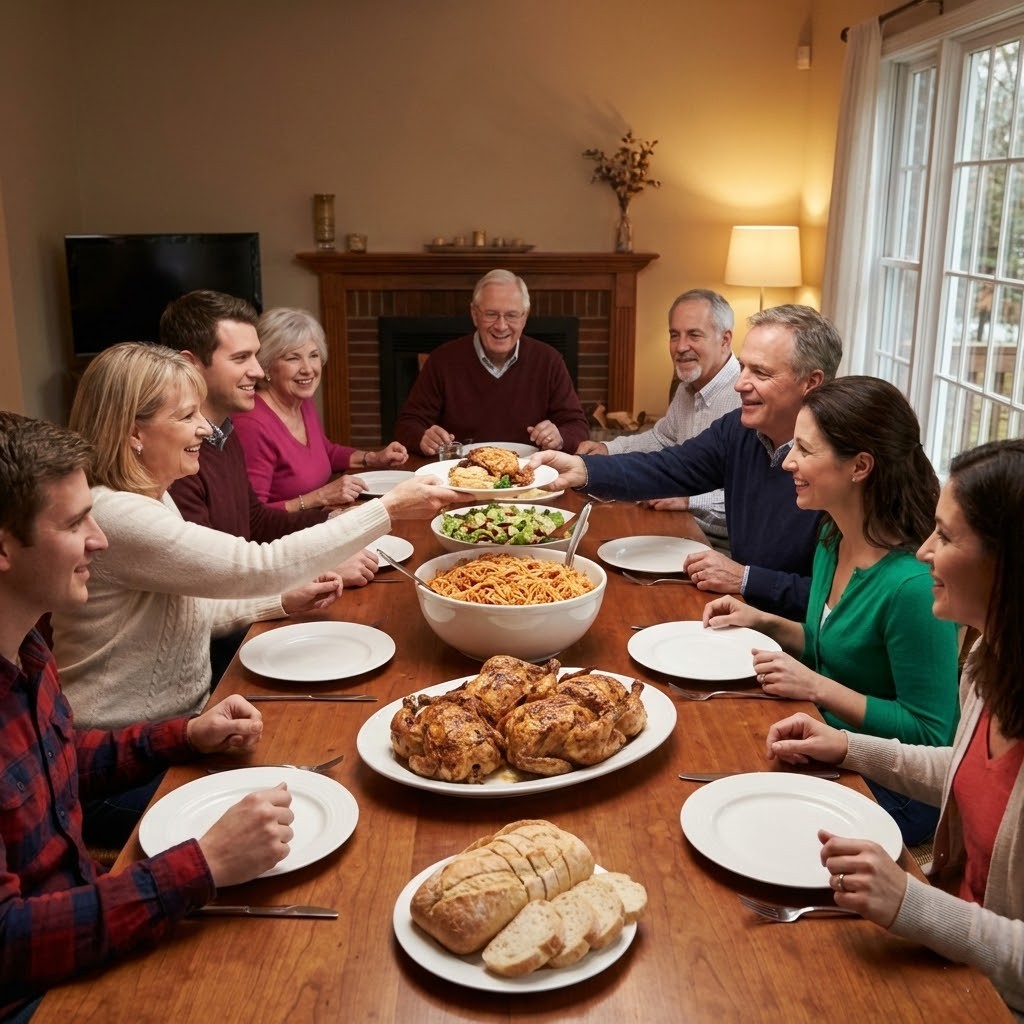
Family-Style
Large platters placed on tables, guests share. Creates intimacy, works for smaller groups.
Best for family gatherings, intimate celebrations, seated dinners.
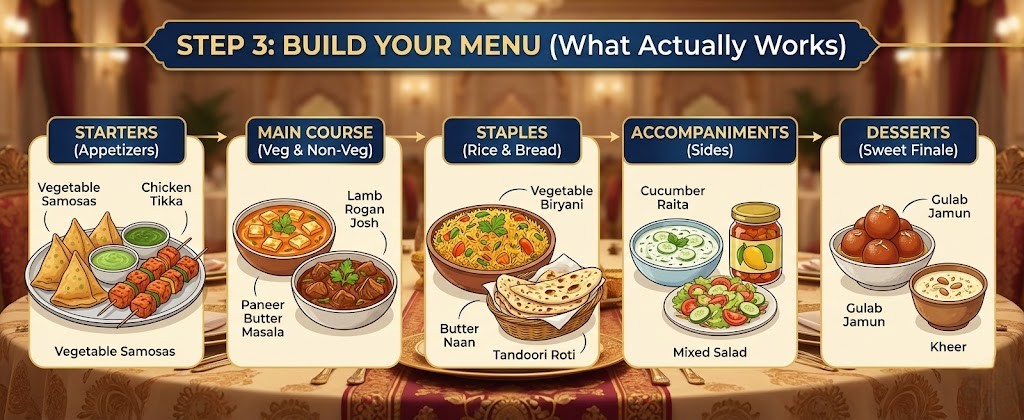
Step 3: Build Your Menu (What Actually Works)
A balanced Indian catering menu includes:
Starters (Optional but Expected at Formal Events)
Samosas, pakoras, paneer tikka, tandoori items
Plan 2-3 pieces per person
Main Dishes (Non-Negotiable)
Minimum 2 vegetable dishes (one creamy, one dry)
1 paneer dish
1 dal
1 non-vegetarian option if your crowd includes meat eaters
Bread and Rice
Roti or naan (2-3 pieces per person)
Jeera rice or pulao
Consider one special rice like biryani for larger events
Accompaniments
Raita
Salad (kachumber or green salad)
Pickles and papad
Chutney
Desserts and Sweets
Gulab jamun, ras malai, or kheer
Traditional mithai (barfi, ladoo)
Plan 2-3 pieces per person
Beverages
Chai is expected at many Indian events
Lassi or cold drinks
Water
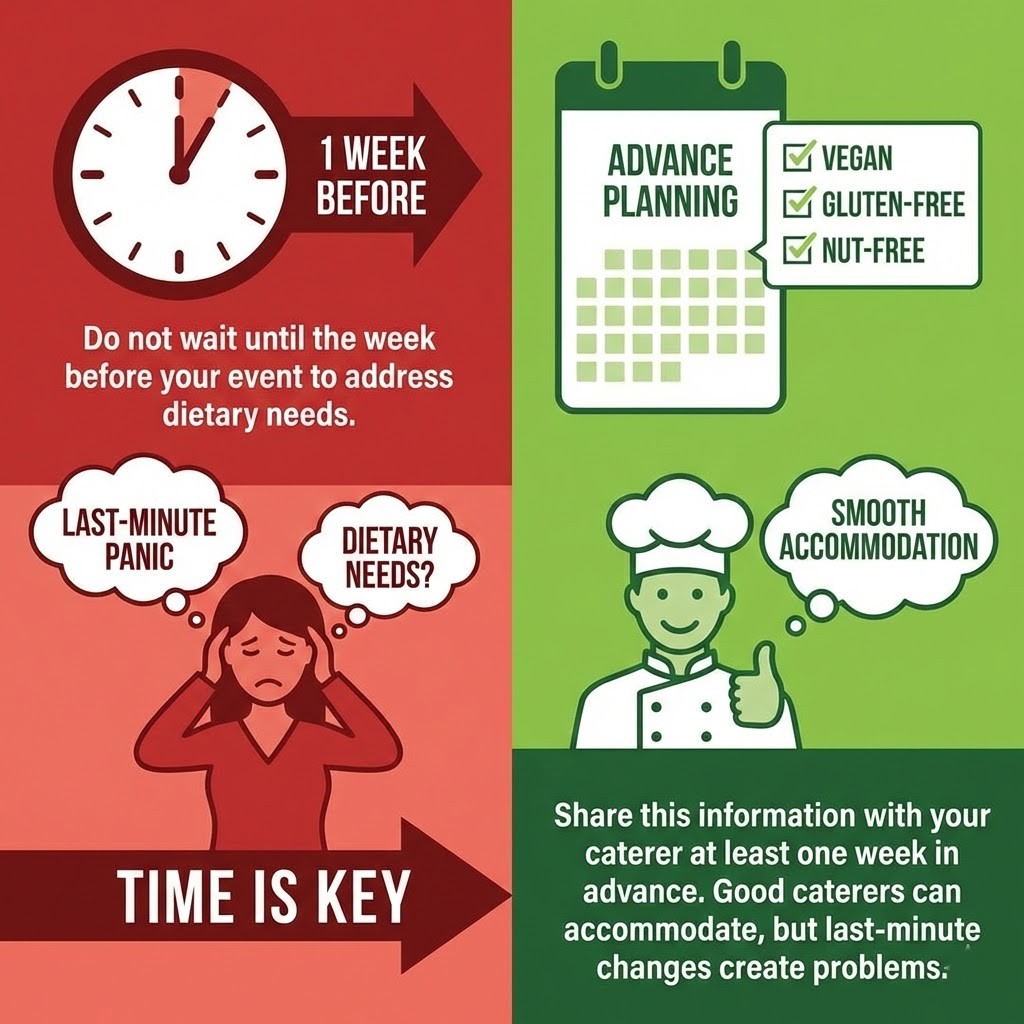
Step 4: Handle Dietary Requirements Early
Do not wait until the week before your event to address dietary needs.
When sending invitations, ask directly:
Vegetarian or non-vegetarian?
Any allergies or restrictions?
Religious dietary requirements (Jain, no onion-garlic, halal)?
Share this information with your caterer at least one week in advance. Good caterers can accommodate, but last-minute changes create problems.
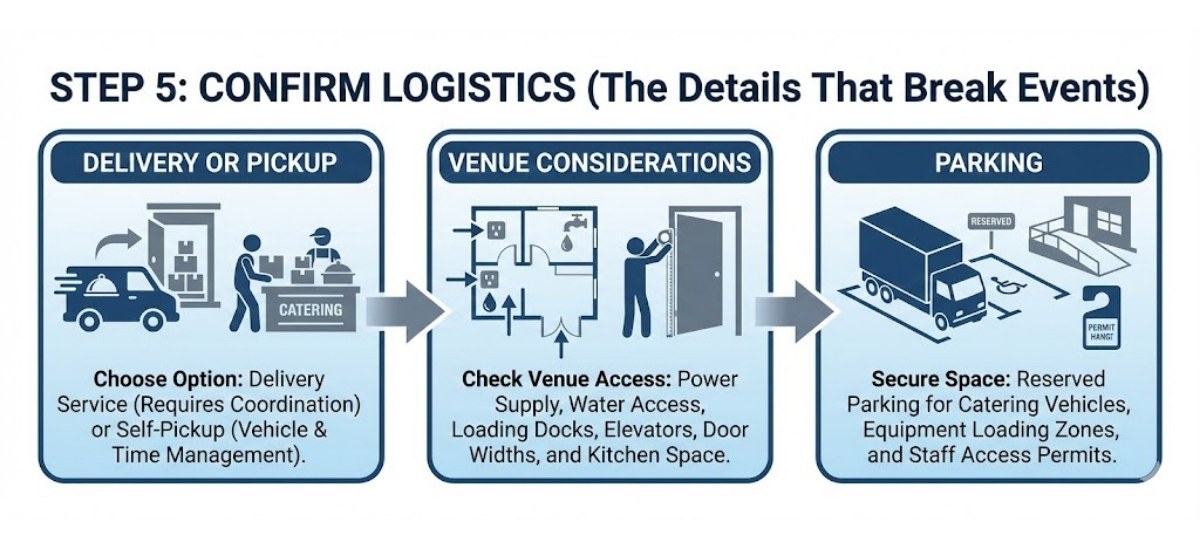
Step 5: Confirm Logistics (The Details That Break Events)
Delivery or Pickup
If your caterer delivers, confirm:
Exact delivery time (factor in your event start time minus setup time)
Delivery location and access (stairs, elevators, parking)
Who receives the delivery
If you pick up:
Confirm pickup time and location
Bring enough vehicle space and help
Bring ice or warmers if food needs to stay temperature-controlled
Venue Considerations
Before finalizing your caterer, verify your venue allows:
Outside catering (some venues require in-house catering)
Open flames or heating equipment
Kitchen or prep space access
Adequate electrical outlets for warmers
If live catering, confirm:
Cooking area availability
Ventilation requirements
Fire safety compliance
Parking for catering vehicles and equipment
Parking for catering vehicles and equipment
Clarify who does what:
Setup time needed before event
Breakdown timing (can caterer leave equipment for pickup later?)
Cleanup responsibilities
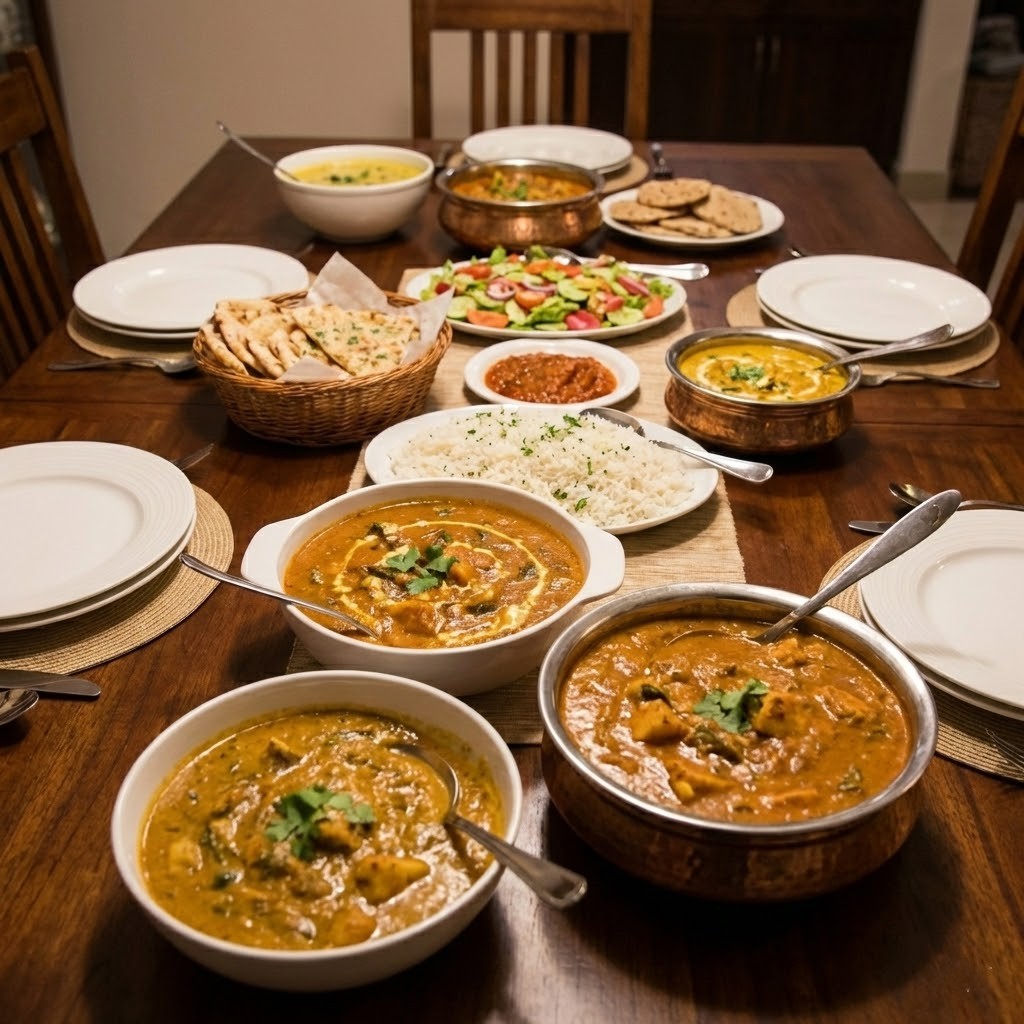
Step 6: Discuss Presentation and Serving
How food is presented affects guest experience.
For buffet catering, ask:
What type of serving dishes are used?
Are chafing dishes included, or do you provide them?
How is food labeled (important for dietary accommodations)?
For live catering:
How many serving staff are included?
What is the server-to-guest ratio?
How is serving managed (buffet lines, table service, stations)?
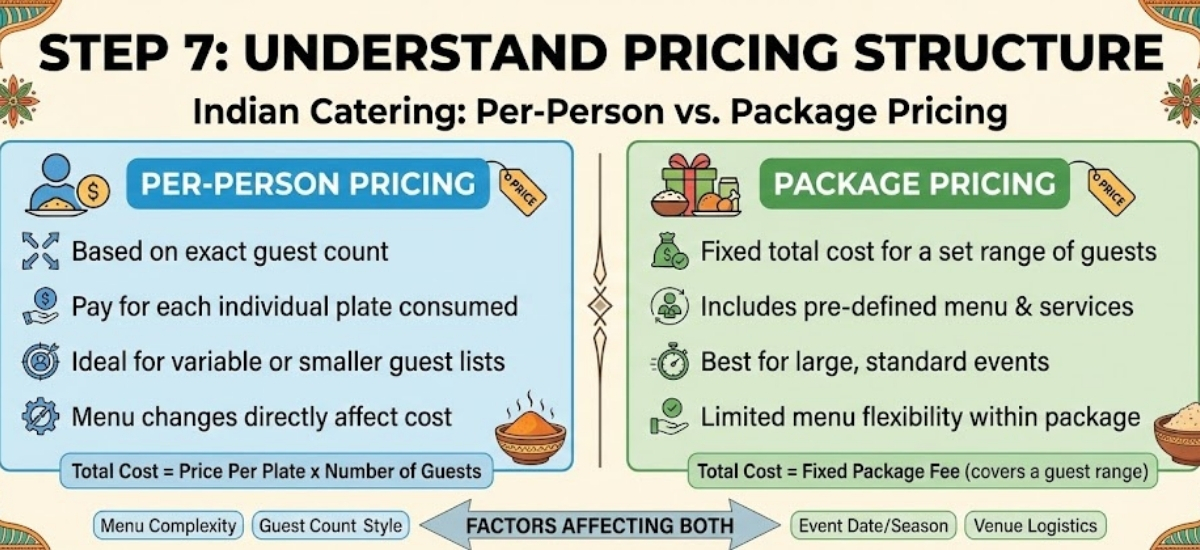
Step 7: Understand Pricing Structure
Indian catering pricing varies based on several factors.
Per-Person vs. Package Pricing
Some caterers charge per person based on menu selection. Others offer package deals for specific headcount ranges.
Ask for both. Sometimes package deals offer better value.
What Is Included
Clarify if pricing includes:
Delivery
Setup and breakdown
Serving staff
Chafing dishes and warmers
Disposable plates and cutlery
Tax and gratuity
Hidden costs surface when these items are billed separately.
Deposits and Payment Terms
Most caterers require:
25-50% deposit to confirm booking
Final headcount confirmation 3-7 days before event
Final payment day-of or immediately after
Understand cancellation policies. Life happens, and you need to know your financial exposure if plans change.
Step 8: Do a Tasting (If Possible)
For large events like weddings, tastings help you make confident menu decisions.
Not all caterers offer tastings for smaller events, but it never hurts to ask. Even a small sample of 2-3 dishes tells you about quality and flavor profile.
If tasting is not available, ask for:
References from recent similar events
Photos of actual events they have catered (not stock photos)
Proof of food safety certifications
Step 9: Confirm Everything in Writing
If tasting is not available, ask for:
Event date and time
Delivery or setup time
Final headcount
Complete menu with quantities
Pricing breakdown
What caterer provides vs. what you provide
Contact person for day-of coordination
Step 10: Have a Day-Of Contact Plan
Know who to call if something goes wrong.
Get direct contact information for:
The person managing your event
Backup contact if primary is unavailable
Delivery driver (for day-of coordination)
Common Catering Mistakes (And How to Avoid Them)
Mistake 1: Underordering Food
This is the most common mistake, and it is the hardest to fix during an event.
Why it happens:
People try to save money by ordering exact headcount or slightly under.
Why it backfires:
Indian hospitality culture makes running out of food a visible failure. Guests notice. They talk about it.
Solution:
Always order 10-15% more than your confirmed headcount. The cost difference is minor. The peace of mind is significant.
Mistake 2: Choosing a Caterer Based Only on Price
Low pricing often signals low capacity, inconsistent quality, or hidden costs that surface later.
Why it happens:
Catering is expensive, and people want to save money.
Why it backfires:
On event day, food quality, timing, or service fails. You cannot fix this once guests arrive.
Solution:
Balance cost with reliability. Ask for references. Check reviews. Verify they have handled events similar in size and type to yours.
Mistake 3: Last-Minute Menu Changes
Changing your menu three days before the event creates execution risk.
Why it happens:
Someone suddenly decides they want biryani instead of pulao, or a guest announces a dietary restriction.
Why it backfires:
Caterers plan ingredient sourcing and prep schedules in advance. Last-minute changes reduce quality or may not be possible.
Solution:
Finalize your menu at least one week before the event. For dietary accommodations, communicate these early and clearly.
Mistake 4: Not Clarifying Serving Responsibility
You assumed the caterer would serve. The caterer assumed you would. Guests arrive, and no one is managing the buffet line.
Why it happens:
Poor communication during planning.
Why it backfires:
Food presentation suffers. Lines get chaotic. Guests serve unevenly, and some items run out while others remain untouched.
Solution:
Explicitly confirm who serves. If it is you, recruit help in advance. If it is the caterer, confirm how many staff and what they will do.
Mistake 5: Ignoring Venue Restrictions
You book a caterer, then discover your venue does not allow outside food or has restrictions that prevent your caterer from executing properly.
Why it happens:
People book venues and caterers separately without cross-checking requirements.
Why it backfires:
You may need to cancel and rebook, pay penalties, or compromise on your preferred caterer.
Solution:
Confirm venue policies before booking a caterer. If live catering, verify space, power, and ventilation requirements.
What to Look for in a Brampton Indian Caterer
Brampton has many catering options. Here is what separates reliable caterers from those who create stress.
Commercial Kitchen Infrastructure
Home-based catering has limits. When events scale beyond 30-40 people, you need commercial kitchen capacity.
A caterer running multiple events from a home kitchen cannot give your event the focus it needs.
Proven Experience with Your Event Type
A caterer skilled at corporate lunches may struggle with wedding-scale live catering. A tray catering specialist may not have live cooking infrastructure.
Ask:
How many events like mine have you done?
Can you provide references from similar events?
What was the largest event you have catered?
Flexibility and Responsiveness
Events change. Guest counts shift. Timing adjusts. Your caterer needs to handle this without drama.
Test responsiveness during planning. If they take days to return calls or emails now, they will be hard to reach when you need day-of adjustments.
Food Safety and Licensing
This should be non-negotiable, but people overlook it.
Verify:
Food handler certifications
Commercial kitchen licensing
Liability insurance
Why Tadka King Handles Catering Differently
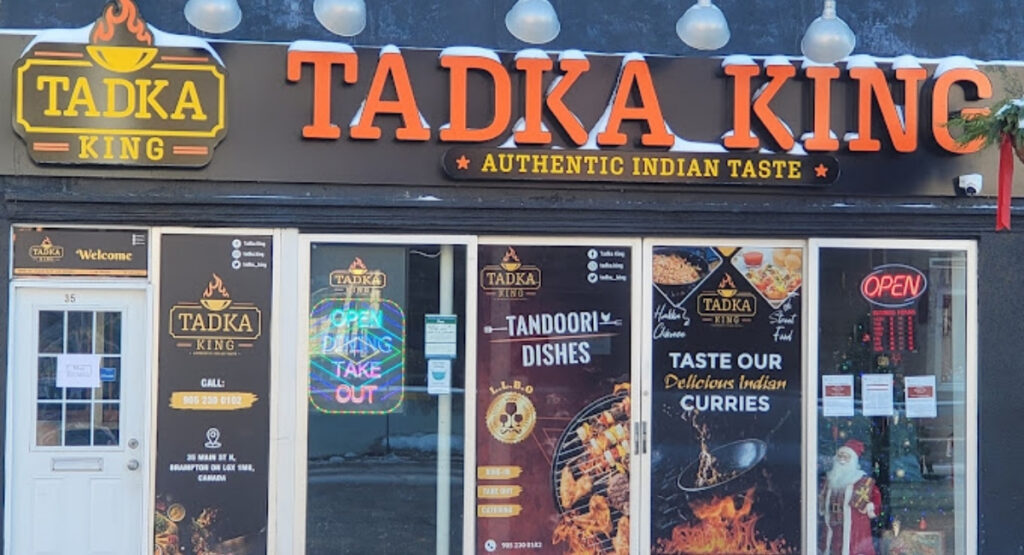
Most caterers in Brampton started as restaurants or sweet shops that added catering later. Tadka King built the opposite model.
We are a catering-first kitchen that happens to be open to the public 24/7.
What This Means for Your Event
Infrastructure Built for Volume
Our kitchen is designed to serve 20 to 500 people without operational strain. Whether it is tray catering for 30 or live catering for 300, the same systems, workflows, and quality standards apply.
One Call for Everything
Sweets, trays, live catering, and last-minute additions— you are not coordinating multiple vendors. One kitchen. One team. One point of contact.
24/7 Availability
Religious events do not always give two weeks’ notice. Family gatherings happen quickly. Emergencies arise. We stay ready because life does not follow business hours.
No Coordination Chaos
When you book live catering with us, you are not managing separate contracts for food, sweets, and beverages. Everything runs as one integrated service.
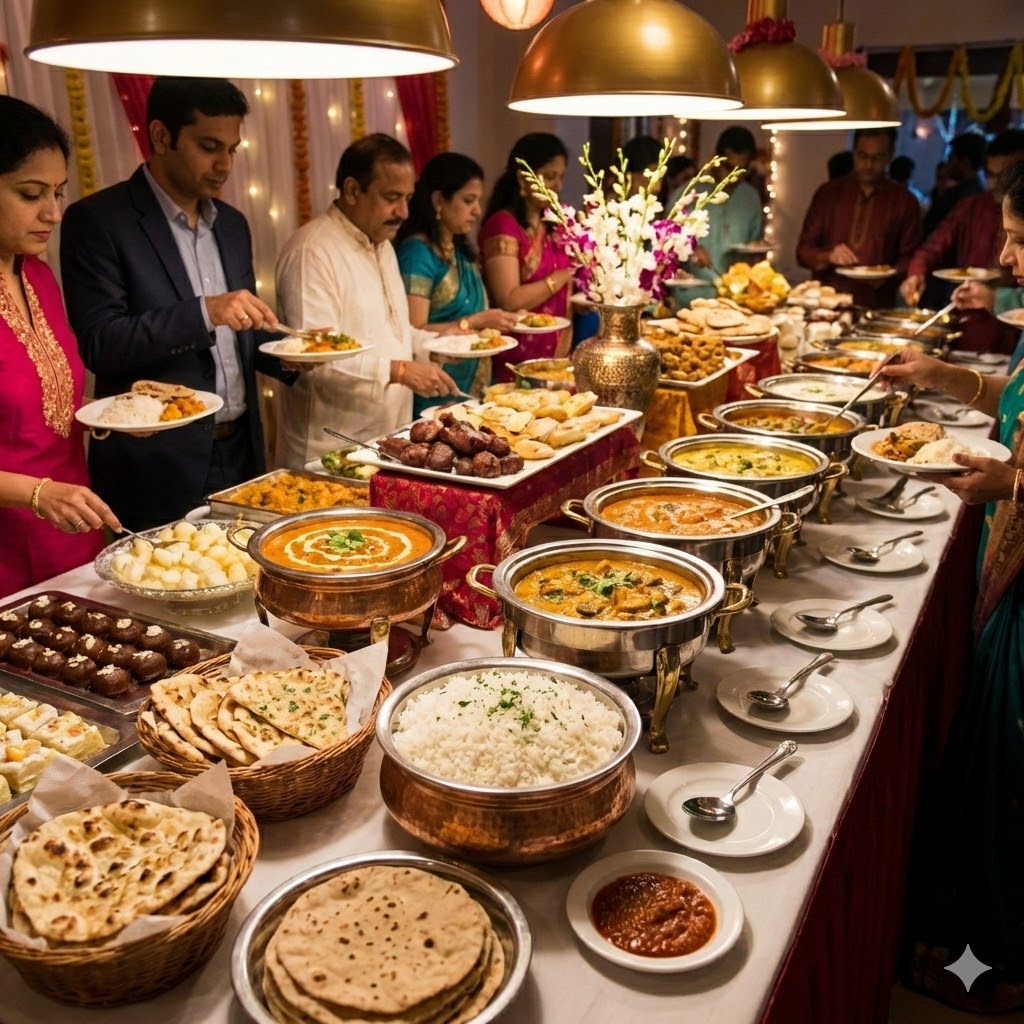
This is the Tadka King.
Indian catering simplified for Brampton events. From birthday trays to wedding buffets, we deliver hot, fresh food with variety and reliability—no stress, just perfect hospitality every time.
Our commercial kitchen handles 20-500 guests with 24/7 availability, one-point contact, and full setup options. Trust the experts who built catering-first.
Why People Come Back
Before committing to any caterer, get clear answers to these questions:
- Have you catered events of this size before?
- What is included in your pricing?
- What do I need to provide?
- When is the final headcount due?
- What happens if my guest count changes?
- How do you handle dietary restrictions?
- What is your cancellation policy?
- Who is my point of contact on event day?
- What time will setup happen?
- How long does food stay hot in your serving setup?
Final Thought: Catering Is About Certainty
Good catering is invisible. Guests remember the event, not the logistics. They remember connection, celebration, and food that met expectations. Bad catering is unforgettable. Guests remember what went wrong. They remember stress you could not hide.
The difference between these outcomes is not luck. It is planning, communication, and choosing a caterer built to handle the full scope of what Indian events require.
At Tadka King, we exist to remove uncertainty from this process. When you need Indian event catering in Brampton—small gatherings or large celebrations, planned months ahead or needed this weekend—we are ready.
Because events do not follow schedules. Your caterer should be ready anyway.
Tadka King – Indian Event Catering in Brampton
35 Main St N, Brampton, ON L6X 1M8
Phone: (905) 230-0102
Open 24/7 – Because your needs don’t follow a schedule
Frequently Asked Questions (FAQs)
What makes Indian event catering different from Western catering?
Indian events require greater variety (3-4 veg dishes, breads, rice, dal for even 30 guests), cultural emphasis on never running out of food, flexible timing for late starts, and standard handling of dietary needs like vegetarian, Jain, or no onion-garlic.
Which catering type is best for my Brampton event?
Tray catering suits small parties (20-100), buffet with setup for medium events (50-200), live on-site cooking for weddings (100-500+). Choose based on budget, venue space, and if you need full service.
How much extra food should I order for an Indian event?
It’s always better to slightly over-order. For uncertain guest lists, people commonly order 2–3 kg or more. Under-ordering can feel awkward, while extra sweets are happily shared or taken home.
What key questions should I ask a Brampton caterer?
Ask about tray insulation/hot-holding time, setup inclusions, staff ratios, dietary handling, pricing breakdowns (delivery, equipment), max capacity, and day-of contact. Confirm everything in writing.
Why choose Tadka King for Indian catering in Brampton?
Tadka King is catering-first with commercial kitchen for 20-500 guests, 24/7 availability, one-point contact for food/sweets/live service, and proven infrastructure—no coordination chaos.

Swaran Sandhu
Swaran Sandhu has 8+ years of experience in the HoReCa industry and a passion for writing about food, restaurants, and Indian cuisine, especially covering locations across Ontario (Canada).