Indian Street Food in Brampton: Your Complete Guide to Chaat, Pav Bhaji & Golgappe
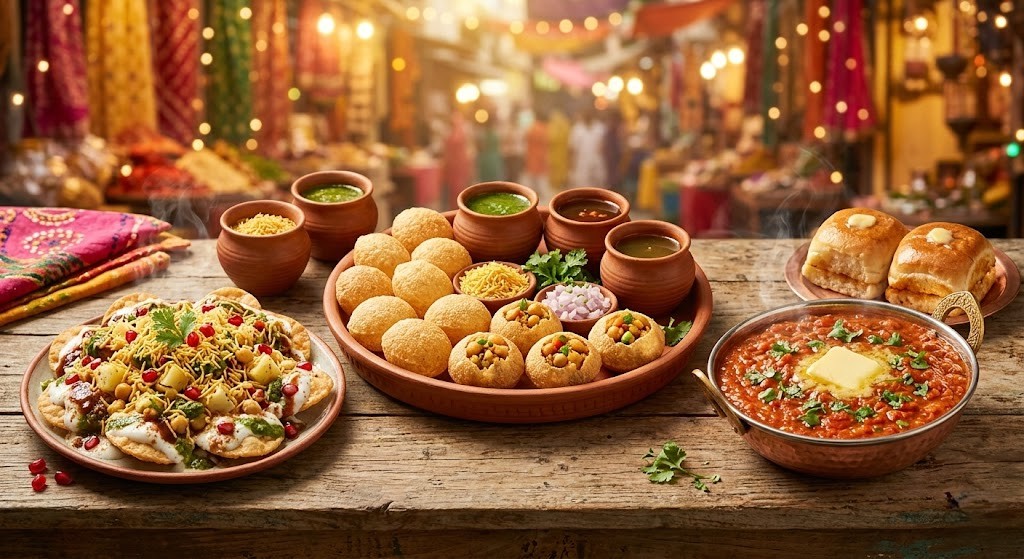
The answer is simple: Indian street food is not really about food. It is about memory, identity, community, and the kind of uncomplicated joy that only comes from something made fresh, sold fast, and eaten standing up with strangers who are having exactly the same moment as you.
For the South Asian diaspora living in Brampton and the Greater Toronto Area, the absence of that experience — the chai-wallahs, the chaat stalls, the sizzling tawa of a Pav Bhaji vendor at dusk — is one of the quiet aches of life abroad. You can find a lot of things in Brampton. But finding Indian street food that actually tastes like the original? That has historically been a different question entirely.
Until Tadka King built its dedicated street food counter. This guide is your complete introduction to Indian street food — what each dish is, where it comes from, what makes it special, and how to experience all of it right here in Brampton at Tadka King — open 24 hours a day, 7 days a week.
Why is it that a small cup of Golgappe — barely two mouthfuls of hollow, crispy puri filled with spicy, tangy tamarind water — can stop a conversation cold, make a grown adult’s eyes water with joy, and immediately transport them 10,000 kilometres back to a lane in Delhi, Mumbai, or Amritsar?
What Is Indian Street Food? Understanding the Culture Behind the Cuisine
Indian street food is one of the most diverse and complex culinary traditions in the world. It spans thousands of dishes, dozens of regional styles, and centuries of evolution. But at its core, Indian street food shares a few defining characteristics that make it unlike any other food culture on earth:
Made fresh to order, never pre-packaged or reheated
Layered with contrasting flavours — sweet, sour, spicy, salty, and umami often in a single bite
Textural complexity — crunchy elements against soft ones, crispy against creamy
Built around chutneys — the tamarind chutney, green mint chutney, and yoghurt that tie every dish together
Affordable and accessible — street food was historically food for everyone, not just the wealthy
Deeply regional — every city and state has its own iconic versions, made with local ingredients and traditions
“Indian street food is not a category of food. It is a way of experiencing India — one bite at a time. Each dish is a postcard from a specific place, a specific moment, a specific way of life.”
The Complete Guide: Every Indian Street Food Dish at Tadka King
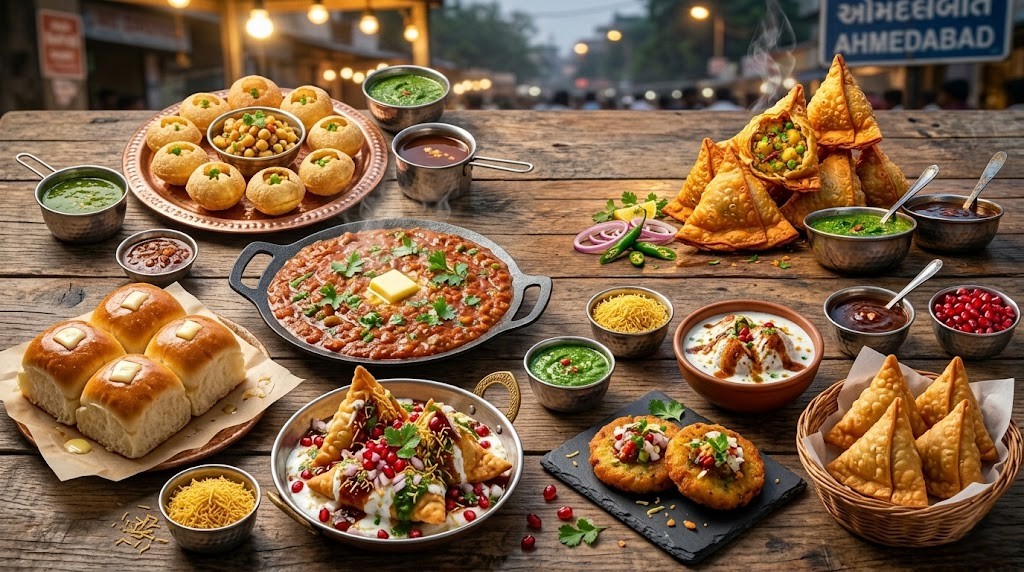
At Tadka King’s street food counter in Brampton, we serve seven iconic Indian street food specialties — each one a classic in its own right, each one made fresh. Here is your complete guide to every single one.
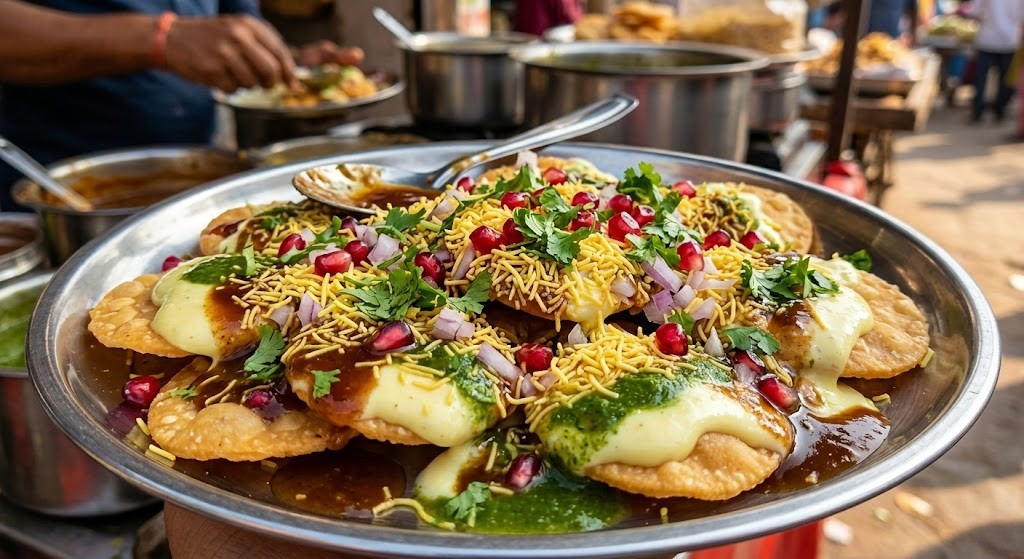
1. Chat Papdi — The Crispy, Saucy Classic
Chat Papdi (also written as Papdi Chaat) is one of the most beloved chaat dishes in North India. It begins with papdi — small, thin, crispy discs of fried dough — which form the base of the dish. On top of these crispy rounds, layers of boiled potato, boiled chickpeas, fresh yoghurt, and both tamarind and green chutneys are added. The dish is finished with chaat masala, red chilli powder, and fresh coriander.
The result is a dish that delivers every flavour and texture simultaneously: the crunch of the papdi, the creaminess of the yoghurt, the sharp tang of tamarind, the heat of the chilli, and the earthiness of the spices. Chat Papdi is the quintessential chaat experience — and the perfect introduction to Indian street food for first-timers.
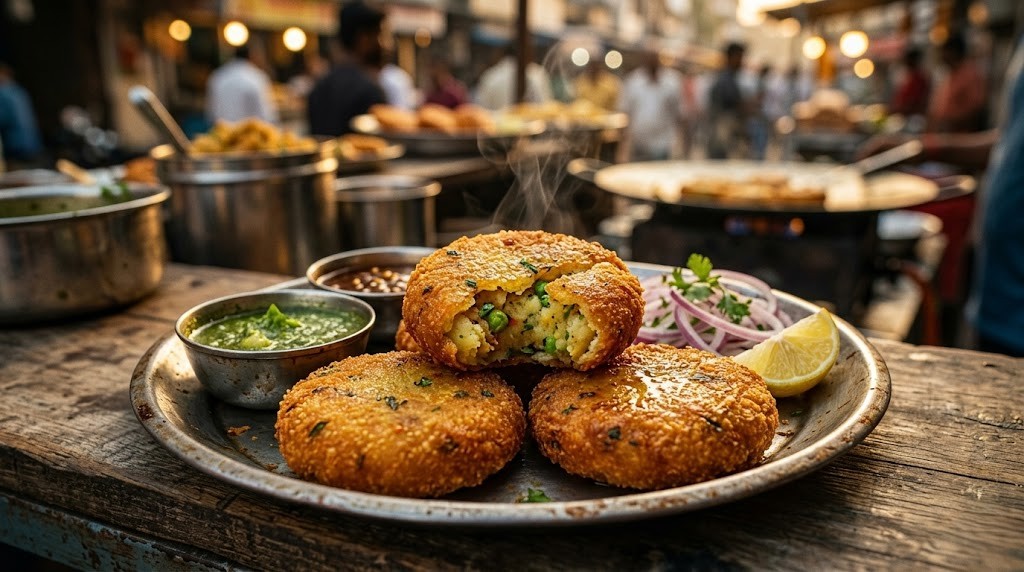
2. Aloo Tikki — The Golden Potato Patty
Aloo Tikki is the Indian street food equivalent of a perfectly crafted potato croquette — but richer, spicier, and infinitely more satisfying. Made from mashed potato mixed with spices and herbs, shaped into round patties and shallow-fried or griddled until golden and crispy on the outside, Aloo Tikki is a dish of deceptive simplicity.
On their own, Aloo Tikkis are wonderful. But the true Aloo Tikki experience involves serving them with a drizzle of tamarind chutney, a spoonful of green mint chutney, and a dusting of chaat masala. Some vendors add a dollop of yoghurt and a handful of sev (crispy chickpea noodles) to create what is essentially an Aloo Tikki Chaat — a more complete, layered dish.
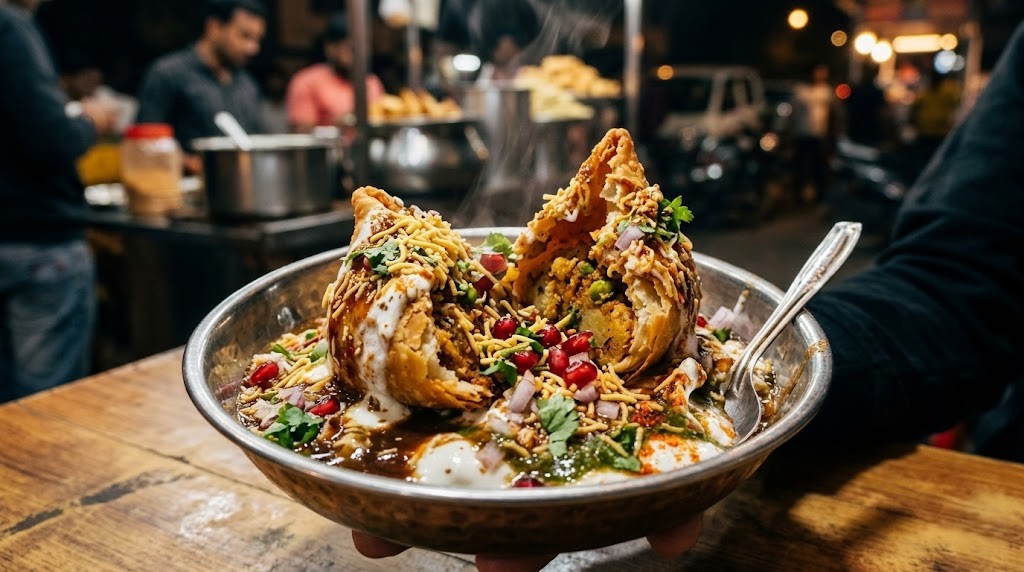
3. Samosa Chaat — The Reinvented Classic
Everyone knows the samosa. It is one of the most universally recognisable Indian snacks — a crispy, triangular pastry filled with spiced potato and peas, fried until golden. But Samosa Chaat takes the samosa and elevates it into something far more ambitious.
In Samosa Chaat, the samosa is broken open and used as the base for a full chaat experience. Boiled chickpeas (chole) are spooned over the top, followed by fresh yoghurt, tamarind chutney, green chutney, red chilli, chaat masala, and fresh coriander. The result is a dish where the crispy pastry soaks up the sauces and softens slightly, creating a contrast of textures that is deeply satisfying.
Samosa Chaat is the dish that surprises first-timers the most. They expect a samosa — and they get a complete meal that rivals anything from a sit-down menu.
4. Pav Bhaji — Mumbai on a Plate
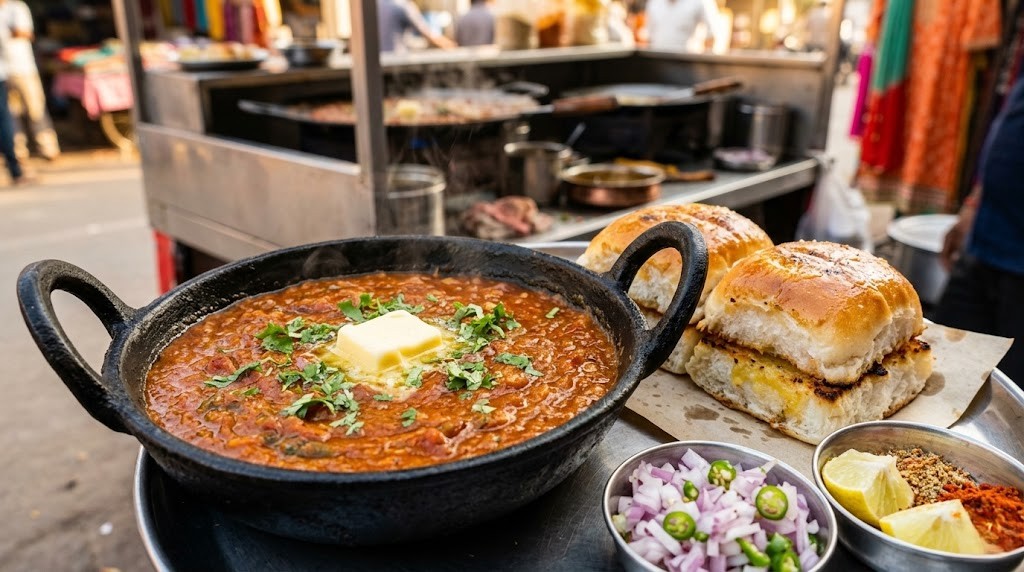
Pav Bhaji is Mumbai’s greatest gift to Indian street food culture. It was originally created in the 1850s as a quick, nutritious meal for textile mill workers — a thick, spiced vegetable mash (bhaji) cooked on a flat tawa and served with soft, buttered bread rolls (pav).
The bhaji is the centrepiece: a complex mash of potato, tomato, onion, capsicum, peas, and cauliflower, cooked down with butter, Pav Bhaji masala (a specific blend of spices), and more butter, until it becomes an intensely flavoured, deep-red paste. The pav is split and toasted on the same buttery tawa. The whole thing is served with a squeeze of lemon, diced onion, and a pat of butter that melts on contact with the hot bhaji.
Few Indian street food dishes are as comforting, as deeply flavoured, or as universally beloved as Pav Bhaji. It is a full meal in itself.
5. Dahi Bhalla — The Cool, Creamy Contrast
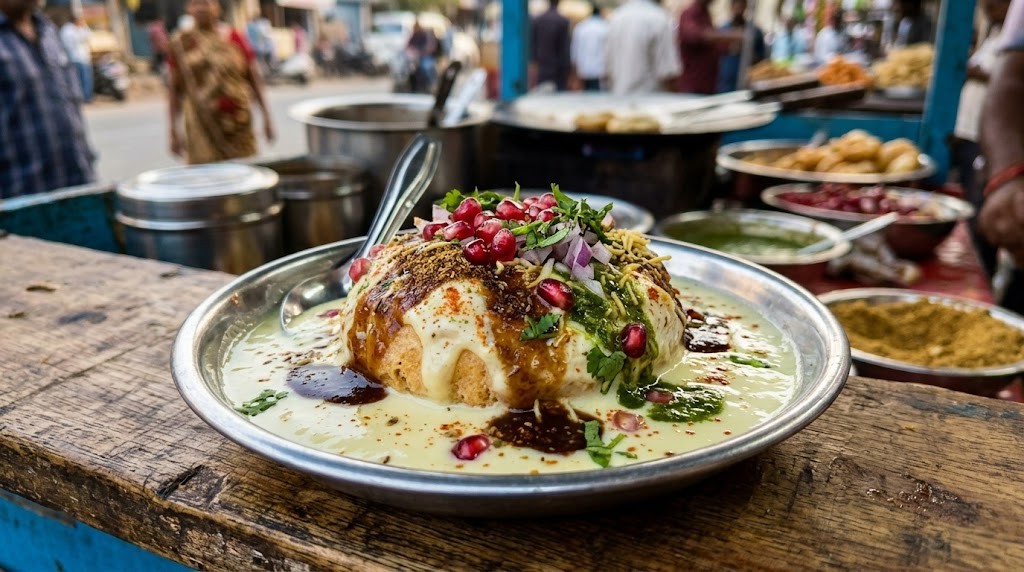
Dahi Bhalla is the street food dish that shows Indian cuisine’s mastery of textural and temperature contrast. Bhallas are soft, spongy dumplings made from ground urad dal (split black lentils), fried until golden and then soaked in water to soften them completely. The soaking process removes any greasiness and makes the bhallas pillowy and light.
These softened bhallas are then placed in a deep dish and covered with chilled, sweetened yoghurt. Tamarind chutney and green chutney are drizzled over the top, followed by red chilli powder, cumin powder, and chaat masala. Dahi Bhalla is cooling, tangy, slightly sweet, and gently spiced — a beautiful counterpoint to the heat and crunch of most other chaat dishes.
6. Golgappe (Pani Puri) — The Crown Jewel of Indian Street Food
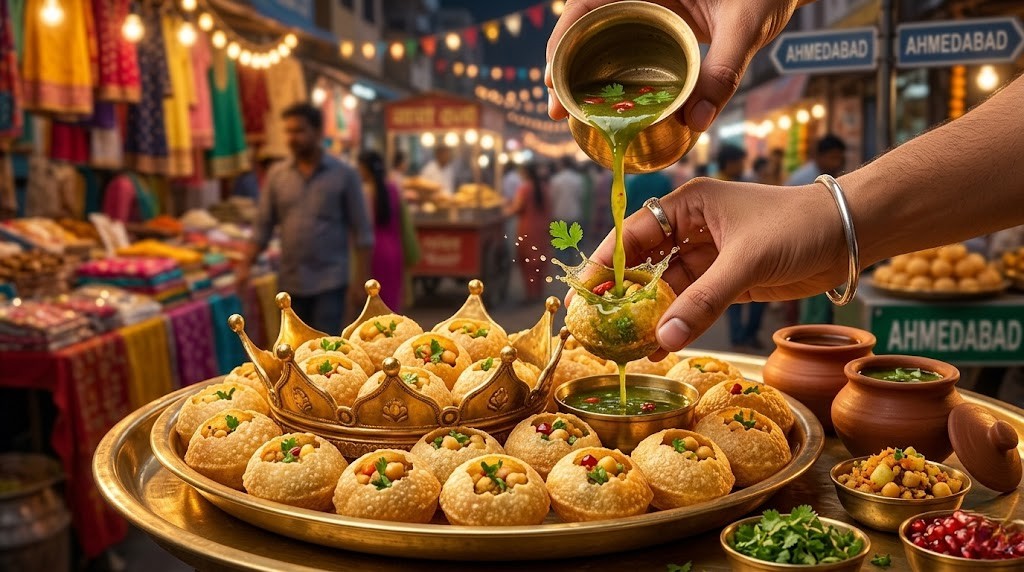
If Indian street food has a crown jewel, it is Golgappe — known as Pani Puri in Mumbai and western India, and Golgappe in Delhi and the north. This is the dish that turns rational adults into competitive eaters, that causes queues at street stalls, and that is universally described as the single most addictive food in Indian cuisine.
The concept is simple: hollow, perfectly round, crispy semolina puris — each no bigger than a golf ball — are pierced at the top, filled with a mixture of spiced mashed potato and chickpeas, and then dunked into a large bowl of tangy, spicy flavoured water (pani) before being handed to you. You eat the entire thing in one bite, letting the puri crack in your mouth and release the cold, flavoured water against the warm filling.
You cannot eat Golgappe slowly. You cannot eat it politely. You can only surrender to it — one puri at a time, eyes watering, demanding another immediately.
7. Samosa — The Icon
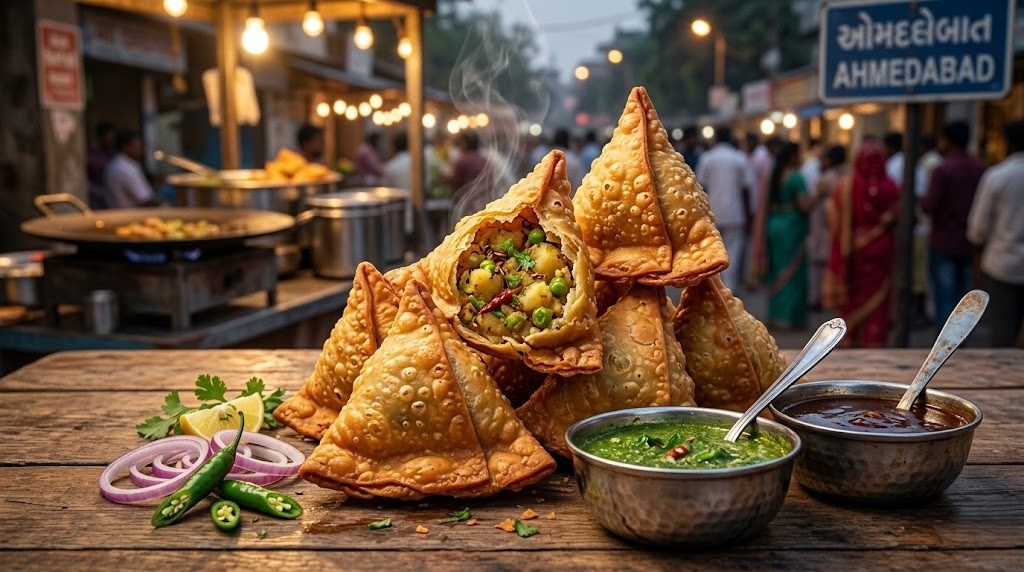
The samosa needs no introduction, but it deserves one anyway. One of the most widely recognised foods in the world, the samosa is a crispy, triangular pastry with a filling of spiced potato and peas, deep-fried to a perfect golden crust. It is served with green mint chutney and tamarind chutney.
What separates a great samosa from a mediocre one is the pastry — it must be thin enough to shatter on the first bite without being too delicate to hold its shape, and the filling must be dry enough that it does not make the pastry soggy, but flavourful enough to stand on its own. At Tadka King, our samosas are freshly fried, generously filled, and served hot.
Quick Reference: All Seven Street Food Dishes at a Glance
Why Tadka King Is Brampton's Destination for Authentic Indian Street Food
Brampton has a large and proud South Asian community, and with it, a genuine hunger for authentic Indian street food — not approximations, not fusion versions, not dishes made for a general audience. The real thing.
Tadka King’s dedicated street food counter was built with exactly that community in mind. Here is what makes our street food offering genuinely different:
How to Build the Perfect Indian Street Food Order at Tadka King
Coming to the street food counter for the first time? Here are three tried-and-tested ordering strategies depending on what you are after:
The First-Timer's Plate
Start with Chat Papdi — it introduces you to all the core chaat flavours
Add a Samosa on the side for something familiar and universally loved
Finish with 6 Golgappe — let the experience speak for itself
The Full Chaat Experience
Samosa Chaat as the anchor dish — substantial and deeply flavoured
Dahi Bhalla alongside — cool and creamy to balance the heat
Aloo Tikki to add a crispy, savoury element to the spread
The Full Meal
Pav Bhaji as the main — it is a complete, filling meal on its own
Aloo Tikki as a starter while the bhaji is being prepared
Golgappe as a palate-cleanser or a starter before the Pav Bhaji arrives
Pro tip: If you are new to Indian street food and cannot decide, ask our team at the counter. We will guide you based on your flavour preferences — and we will almost certainly suggest the Golgappe regardless.
Pair your street food experience with a dine-in meal. Start at the street food counter, then move to a table for the full Tadka King dine-in experience — including our signature Amritsari Kulcha and a full menu of Punjabi and North Indian dishes.
Our Expertise: Why You Can Trust Our Street Food
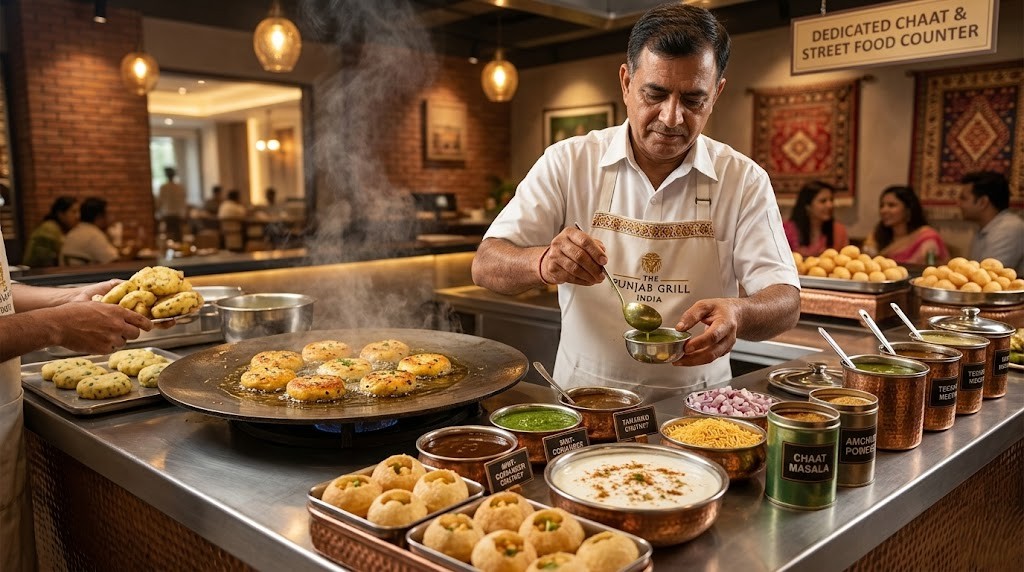
Tadka King’s street food counter is not a marketing add-on. It is a purpose-built food station staffed by people who grew up with these dishes — who know exactly how a Pani Puri puri should sound when it shatters, how dry an Aloo Tikki filling needs to be, and how the balance of sweet, sour, and spicy in a chaat should hit the palate.
Our team has deep personal and professional roots in Punjabi cuisine. We understand what the South Asian community in Brampton is looking for when they come to us for street food. We are not recreating something we learned from a recipe — we are serving dishes that are part of our own culinary heritage.
Experience. Expertise. Authenticity. Community trust. These are not claims we make lightly — they are the reason thousands of people across the GTA choose Tadka King for their Indian street food fix.
Tadka King – Brampton's 24/7 Punjabi Kitchen
35 Main St N, Brampton, ON L6X 1M8
Phone: (905) 230-0102
Open 24/7 – Brampton’s Punjabi Kitchen
Resources & Further Reading
Explore more from Tadka King and continue your journey through authentic Indian cuisine:
- Indian Street Food in Brampton — Tadka King Counter — Full details on our street food menu
- Full Food Menu — Explore our complete Punjabi and North Indian dine-in menu
- Dine-In Experience at Tadka King — Full sit-down dining, open 24/7 in Brampton
- Reserve a Table — Book your table online and pair your street food visit with a full dine-in meal
- Indian Catering Services in Brampton — Bring Indian street food to your event with our catering packages
- Live Catering Service — Live street food stations for weddings and large events
- Traditional Indian Sweets — Complete your street food experience with freshly made mithai
- Explore More on Our Blog — More deep-dive guides on Indian cuisine, dishes, and dining in Brampton
- Visit the Tadka King Homepage — Discover everything Tadka King has to offer Brampton and the GTA
Frequently Asked Questions (FAQs)
What Indian street food dishes does Tadka King serve?
Tadka King’s dedicated street food counter serves seven classic dishes: Chat Papdi, Aloo Tikki, Samosa Chaat, Pav Bhaji, Dahi Bhalla, Golgappe (Pani Puri), and Samosa. All are freshly prepared.
What is the difference between Golgappe and Pani Puri?
Golgappe and Pani Puri are the same dish — they are regional names for the same street food. Golgappe is the name used in Delhi and North India; Pani Puri is what the dish is called in Mumbai and western India. Both refer to hollow, crispy puris filled with spiced potato and dipped in tangy flavoured water.
Is Indian street food vegetarian?
The vast majority of traditional Indian street food is fully vegetarian. All seven dishes at Tadka King’s street food counter — Chat Papdi, Aloo Tikki, Samosa Chaat, Pav Bhaji, Dahi Bhalla, Golgappe, and Samosa — are vegetarian. If you have specific dietary requirements, please inform our team.
What is Pav Bhaji made of?
Pav Bhaji is a thick, spiced vegetable mash (bhaji) made from potatoes, tomatoes, onion, capsicum, peas, and cauliflower, cooked down with butter and a specific blend of Pav Bhaji masala spices. It is served with soft white bread rolls (pav) that are toasted on a buttered tawa. The dish is finished with fresh onion, a squeeze of lemon, and a pat of butter.
How spicy is Indian chaat?
Traditional Indian chaat ranges from mildly spiced to moderately spicy, depending on the dish and the vendor. Golgappe pani can be quite fiery; Chat Papdi and Dahi Bhalla are generally milder. At Tadka King, we prepare our street food with an authentic Punjabi spice profile. If you have a lower spice tolerance, please let our team know and we can adjust where possible.
Where can I find authentic Indian street food in Brampton?
Tadka King offers Brampton’s most comprehensive Indian street food selection, with seven classic dishes available at our dedicated counter — open 24 hours a day, 7 days a week. Visit our street food page for more details, or come in and order directly at the counter.
Can I combine street food with a full dine-in meal at Tadka King?
Absolutely — and we encourage it. Many of our guests start with street food at the counter before moving to a table for a full dine-in meal. You can reserve a table online and begin your visit at the street food counter while your table is being prepared.
Can Indian street food be included in a catering order?
Yes. Tadka King’s Indian catering services can include street food items as part of a custom catering package. Street food live stations are particularly popular at weddings, corporate events, and large family celebrations. Contact us to discuss your requirements.
What makes Tadka King's Samosa Chaat different from a regular samosa?
Samosa Chaat is an entirely different experience from a standard samosa. While a regular samosa is served as-is with chutney, Samosa Chaat involves breaking the samosa open and using it as the base for a layered chaat — topped with chole (spiced chickpeas), fresh yoghurt, tamarind chutney, green chutney, chaat masala, and coriander. The result is a rich, multi-layered dish that is substantially more complex and satisfying than the samosa alone.
Is Tadka King's street food available late at night?
Yes. One of Tadka King’s defining advantages is that we are open 24 hours a day, 7 days a week — which means our street food counter is available at any hour, including late night and early morning. Whether your craving strikes at 11 PM or 4 AM, we are ready.

Swaran Sandhu
Swaran Sandhu has 8+ years of experience in the HoReCa industry and a passion for writing about food, restaurants, and Indian cuisine, especially covering locations across Ontario (Canada).