Punjabi Thali: What It Is, What's In It, and Where to Get the Best One in Brampton
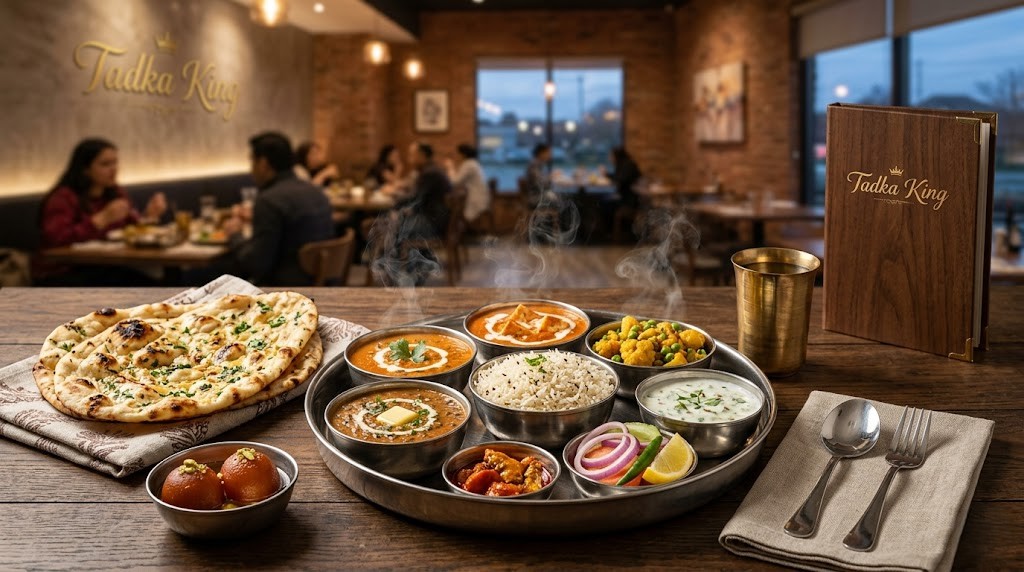
If you have ever sat down at an Indian restaurant and watched a large steel plate arrive at another table, stacked with small bowls of curries, dal, bread, rice, chutneys, and something sweet — and wondered what that was — the answer is a thali. And if that restaurant served Punjabi food, what you saw was one of the most satisfying, complete meals in all of Indian cuisine.
A Punjabi thali is not just a meal. It is a philosophy of eating — the idea that a proper meal should offer multiple flavours, textures, and temperatures together on one plate, giving the diner a full and balanced experience in a single sitting. It is the kind of meal that has fed Punjabi families for generations and has become one of the most searched Indian food experiences in Canada.
This guide explains what a Punjabi thali actually is, what goes into a traditional one, how to read the variations, and where to find a genuinely authentic version in Brampton.
Who Is This Guide For?
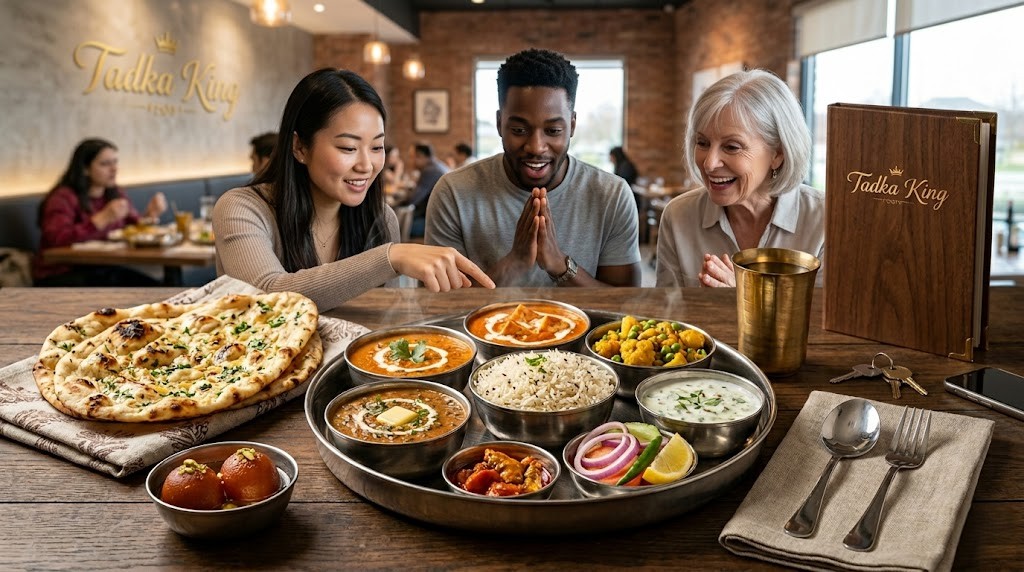
Food explorers who want to understand Indian cuisine beyond individual dishes.
South Asian families and diaspora looking for a thali that feels like home cooking.
Brampton residents curious about what a Punjabi thali includes.
Visitors to Brampton looking for an authentic and complete Indian meal experience.
Anyone who has seen a thali on a menu and was not sure what to expect.
Understanding the thali format transforms the dining experience from a single dish order into a complete and intentional Punjabi meal.
What Is a Thali?
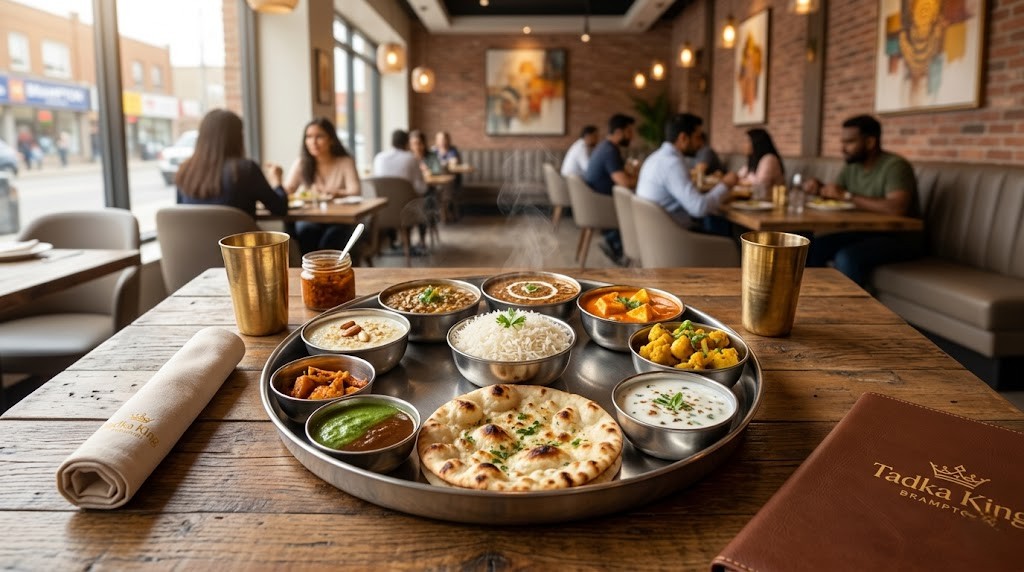
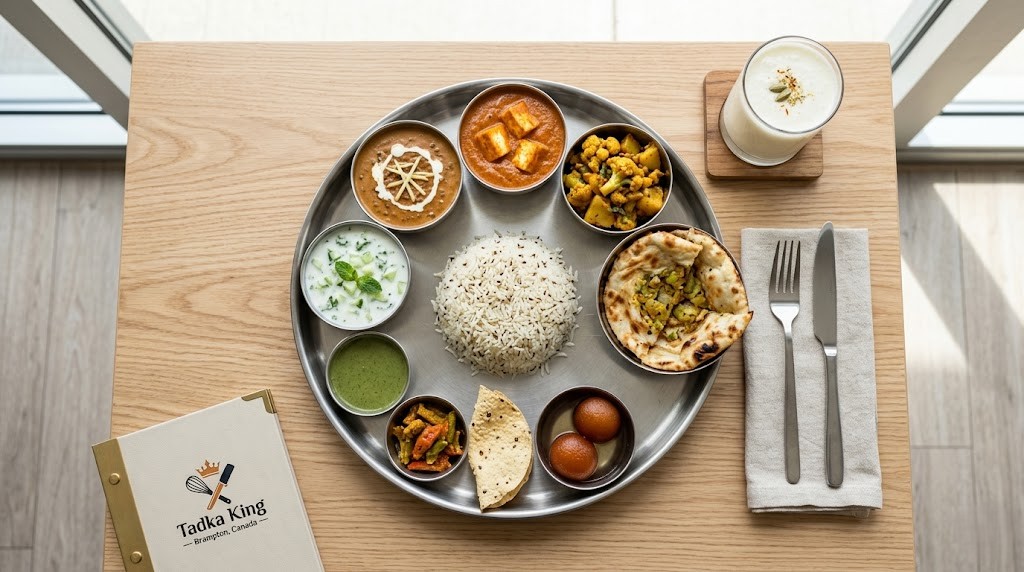
The word “thali” simply means plate in Hindi. But in the context of Indian cuisine, a thali refers to a complete meal served on one large plate — traditionally a round steel platter — with multiple small bowls (called katoris) arranged around a central portion of rice or bread.
The thali concept exists across many regional Indian cuisines — Rajasthani, Gujarati, South Indian, Bengali — but each region fills the plate with its own signature dishes and traditions. The Punjabi thali is rooted in the hearty, buttery, spice-forward cooking of northern India’s Punjab region, and it reflects that cuisine’s identity: generous, warming, and deeply satisfying.
What makes a thali different from ordering multiple dishes separately is the intention behind it. A thali is designed as a balanced meal, where each component serves a role — the dal provides protein, the sabzi (vegetable) provides texture and nutrition, the bread or rice provides carbohydrate, the raita cools the palate, and the sweet closes the meal. It is a full nutritional and flavour arc in one plate.
What Does a Traditional Punjabi Thali Include?
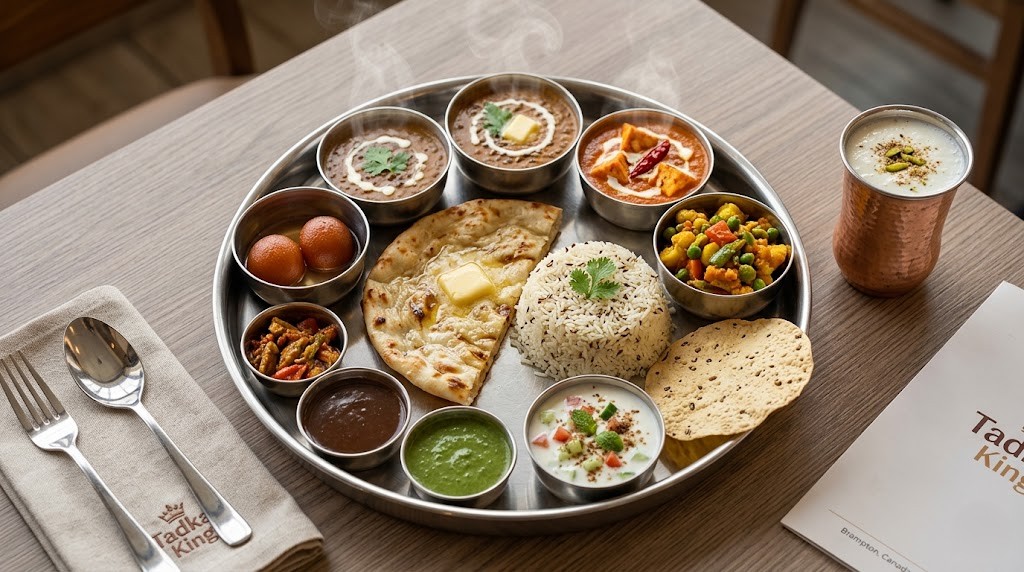
A classic Punjabi thali is built around a core set of components, though variations exist between restaurants, regions, and family traditions. Here is what you will typically find:
The Bread — Roti, Naan, or Kulcha
Every Punjabi thali centres around freshly baked bread. This is the vehicle for eating the curries and dal, and in a Punjabi kitchen it is almost always made in a tandoor. Tandoori Roti, Butter Naan, and Amritsari Kulcha are the most common choices. At Tadka King, Amritsari Kulcha — the restaurant’s signature dish — is the defining bread choice: stuffed with spiced potato or paneer, baked in a live tandoor, and served with a generous pat of butter.
Dal — The Heart of the Thali
Dal is non-negotiable in a Punjabi thali. Dal Makhani — slow-cooked black lentils with butter and cream — is the most iconic choice and one of Punjab’s greatest culinary contributions. Dal Tadka, a lighter yellow lentil preparation tempered with cumin, garlic, and ghee, is also common. The dal provides warmth, protein, and the kind of deep comfort that makes a thali feel like a home meal.
Sabzi — Vegetable Curry
A vegetable preparation adds texture and colour to the thali. Aloo Gobi (potato and cauliflower), Bhindi Masala (okra), Palak (spinach), or seasonal vegetables cooked with Punjabi spices are typical choices. The sabzi is usually drier in texture compared to the dal, which creates a natural textural balance on the plate.
Paneer Dish
Paneer — Indian cottage cheese — is Punjab’s favourite protein, and it appears in most thalis in some form. Paneer Butter Masala, Kadhai Paneer, Shahi Paneer, or Matar Paneer are all common inclusions. The paneer dish is usually the richest, creamiest element of the thali and is often the one that guests reach for first.
Rice
Steamed Basmati rice or Jeera Rice (cumin-tempered rice) provides the neutral base of the thali. It is eaten with the curries and dal and offers a lighter, cleaner contrast to the richer bread and curry combinations.
Raita
Raita is a yogurt-based side — often with cucumber, boondi, or mint — that serves as the natural cooling element of the meal. In Punjabi cuisine, it is not optional. It balances the richness of the dal and paneer and soothes any heat from the spices. For many diners, raita is the component that makes the whole plate feel refreshing rather than heavy.
Chutney and Pickle
Green mint-coriander chutney and a sweet or tangy tamarind chutney add brightness and contrast. Achar (Indian pickle) — often mango or mixed vegetable — adds sharp, fermented intensity. These condiments are small in portion but significant in how they open up the flavours of the main dishes.
Papad
A thin, crispy lentil wafer served on the side, papad adds crunch and a roasted, slightly smoky note. It is eaten alongside the curries or crushed into the dal for texture.
Sweet — Mithai or Dessert
No Punjabi thali is complete without a sweet ending. Gulab Jamun, Halwa, Kheer, or Phirni are the most traditional closings. The sweet serves a digestive purpose as well as a celebratory one — it signals that the meal is complete.
Lassi
A glass of thick, creamy lassi — sweet or salted — is the traditional Punjabi thali drink. It is cooling, filling, and deeply satisfying. Sweet lassi with a layer of fresh cream is the most classic form, though rose, mango, or plain salted versions are also common.
Punjabi Thali Components at a Glance
Are There Different Types of Punjabi Thali?
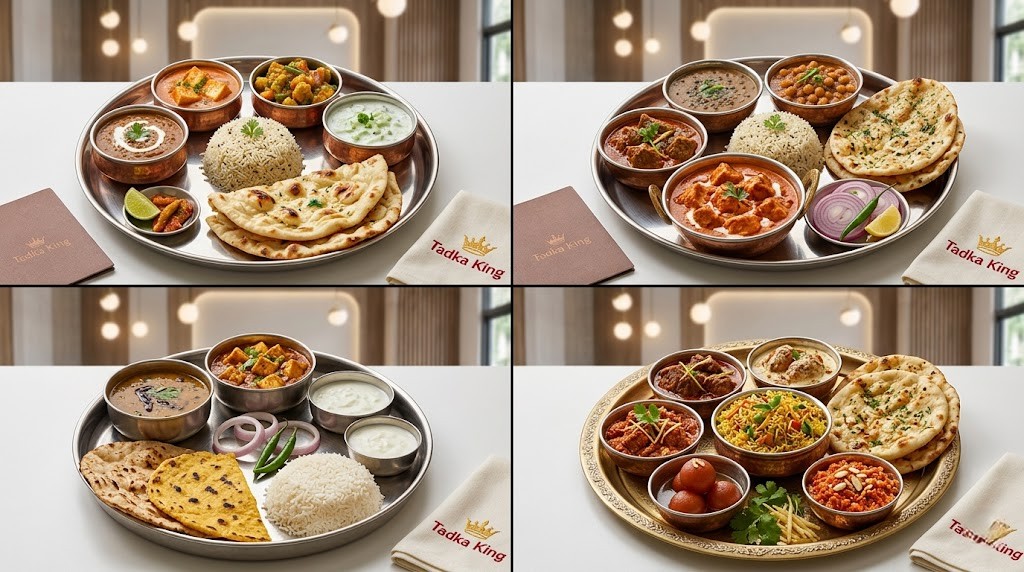
Yes. Within Punjabi thali culture, there are variations based on occasion, setting, and preference:
Vegetarian Punjabi Thali: The most common form, built entirely around dal, paneer, and vegetable dishes. Rich, buttery, and deeply satisfying without any meat.
Non-Vegetarian Punjabi Thali: Includes one or more meat-based curries — Butter Chicken, Kadhai Chicken, or Lamb Rogan Josh — alongside the standard vegetarian components.
Dhaba-Style Thali: A more rustic, roadside version inspired by Punjabi highway dhabas — simpler preparations, bolder spicing, and generous portions.
Festival or Special Occasion Thali: A more elaborate version served at weddings, religious events, or celebrations — more components, more rich dishes, and always more dessert.
Why Is Tadka King the Right Place for a Punjabi Thali in Brampton?
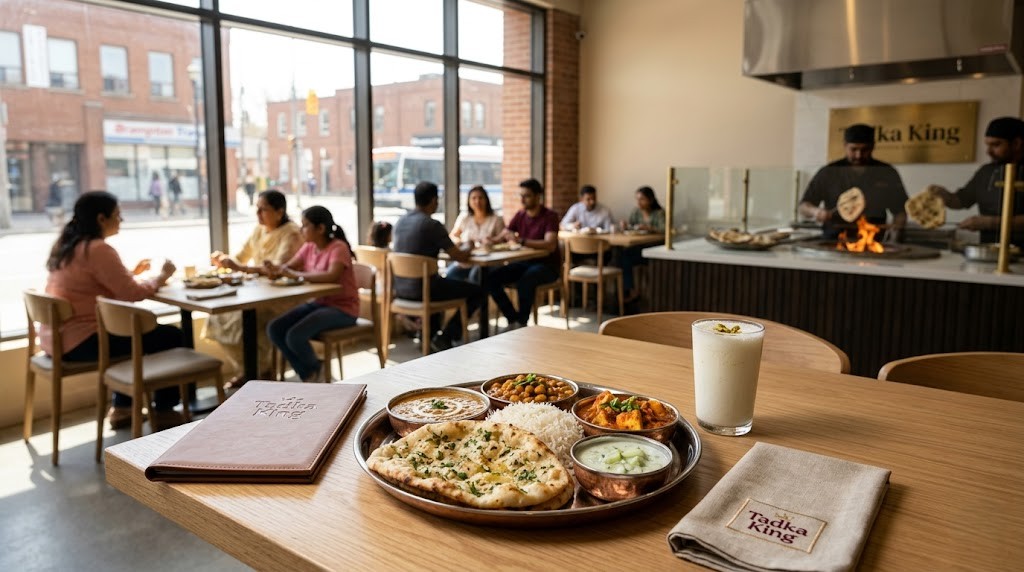
Tadka King’s menu and identity are built around authentic Punjabi food — the exact cuisine that defines the thali format. Its signature Amritsari Kulcha, live tandoor, Dal Makhani, Channa, Paneer dishes, and Lassi are all core Punjabi thali components, which means the restaurant is naturally positioned to deliver a thali experience that feels genuinely Punjabi rather than a generic Indian spread.
Located at 35 Main St N in downtown Brampton — a city with one of the largest Punjabi communities in Canada — Tadka King serves a customer base that knows authentic Punjabi food well. That context raises the bar and is one reason the restaurant has built its reputation around dishes that hold up to that expectation.
For visitors from outside the community who want to experience a proper Punjabi thali for the first time, Tadka King’s approachable, casual dining environment and knowledgeable staff make it a natural starting point.
Experience the Punjabi Thali at Tadka King
A Punjabi thali is one of those meals that is best understood by experiencing it. The combination of textures, temperatures, and flavours on one plate is something that a menu description cannot fully convey. If you have not tried one in Brampton yet, Tadka King is the place to start.
Explore the Menu → https://tadkaking.ca/food-menu/ | Visit Us: 35 Main St N, Brampton, ON
Frequently Asked Questions (FAQs)
What is a Punjabi thali?
A Punjabi thali is a complete traditional meal served on a large round plate (thali) with multiple small bowls (katoris) containing different dishes — dal, vegetable curry, paneer, rice, bread, raita, chutney, papad, and a sweet — all served together as a balanced meal.
What dishes are always in a Punjabi thali?
The core components are dal (usually Dal Makhani or Dal Tadka), a paneer dish, a vegetable curry (sabzi), bread (Naan, Roti, or Kulcha), rice, raita, chutney, papad, and a sweet like Gulab Jamun. Lassi is the traditional accompanying drink.
Is a Punjabi thali vegetarian?
A traditional Punjabi thali is often vegetarian, built around dal, paneer, and vegetable dishes. Non-vegetarian versions that include chicken or meat curries are also common, particularly in restaurant and dhaba settings.
What makes a Punjabi thali different from other Indian thalis?
Punjabi thalis are known for their richness — heavy use of butter, ghee, cream, and paneer. The bread component (especially tandoor-baked Kulcha or Naan) is more prominent than in South Indian or Gujarati thalis, which focus more on rice.
Is Dal Makhani always in a Punjabi thali?
Dal Makhani is the most iconic Punjabi dal and is the most common choice in a traditional thali. It is made with black lentils slow-cooked with butter and cream, giving it a rich, smoky flavour that is distinctly Punjabi.
What is the significance of raita in a Punjabi thali?
Raita is the cooling element of the thali. It balances the richness of the butter-heavy dishes and soothes any heat from the spices. It is considered an essential part of the meal, not just a side dish.
Can I get a Punjabi thali at Tadka King in Brampton?
Tadka King’s menu is built around authentic Punjabi dishes — Amritsari Kulcha, Dal Makhani, Paneer dishes, Channa, and Lassi — which are all core thali components. Speak to the team about a full thali experience.
Where is Tadka King located in Brampton?
Tadka King is at 35 Main St N, Brampton, Ontario L6X 1M8, in downtown Brampton near Nelson Square Parking. Open daily from 11 AM to 11 PM.

Swaran Sandhu
Swaran Sandhu has 8+ years of experience in the HoReCa industry and a passion for writing about food, restaurants, and Indian cuisine, especially covering locations across Ontario (Canada).